
 Tekst zawiera fragmenty mojej rozmowy z Brianem Nosekiem, znanym propagatorem ruchu Otwartej Nauki i autorem wielu naukowych inicjatyw, o których już wielokrotnie pisałem na łamach tego bloga i nie tylko.
‚If we don’t solve the incentives problem, we will become a very narrow discipline’
Tomasz Witkowski meets Brian Nosek, in an edited extract from Tomasz’s new book of interviews.
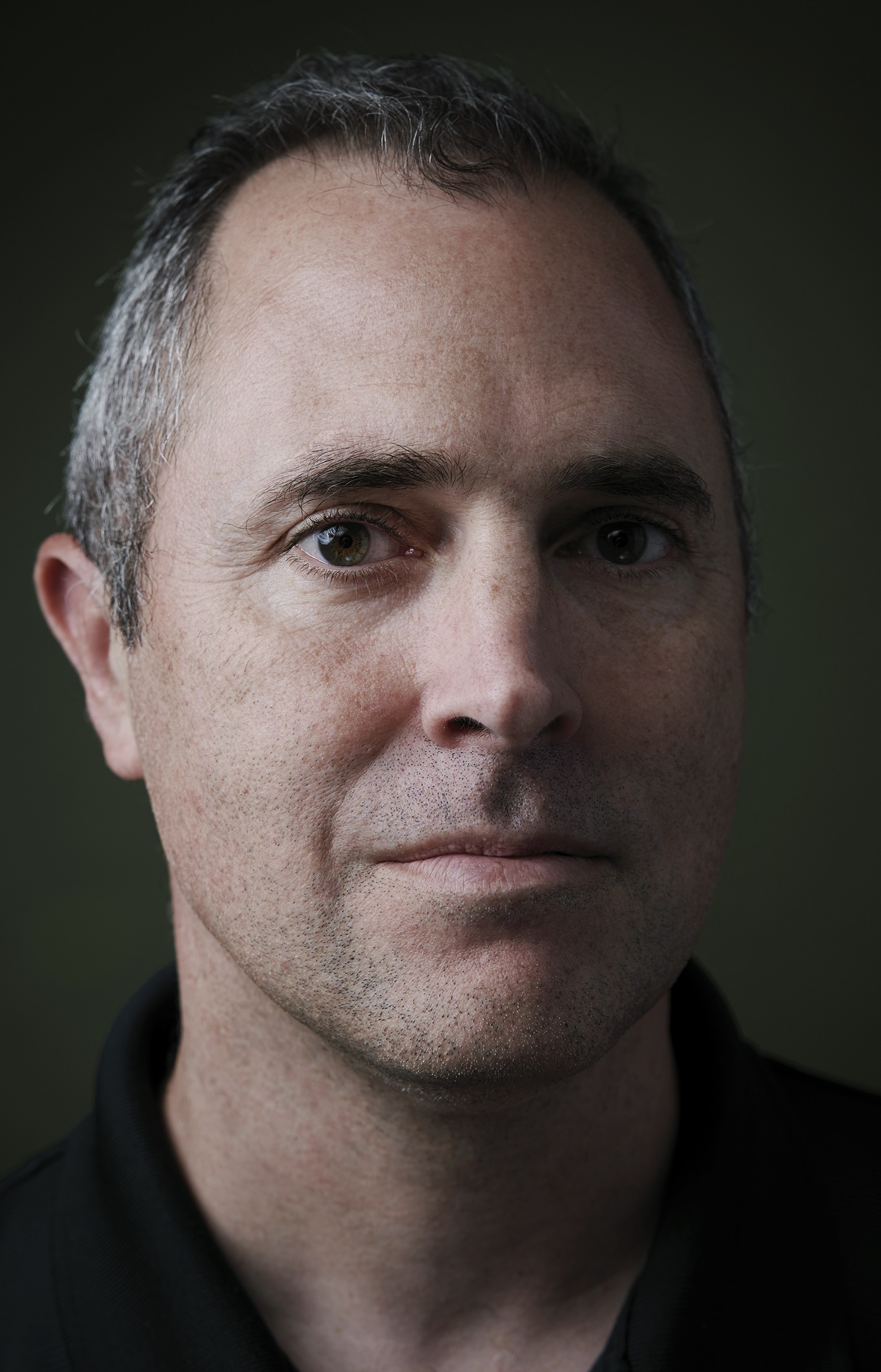 This is an edited extract from ‘Chapter 13, Brian A. Nosek: Open Science and Reproducibility Projects’ in Shaping Psychology: Perspectives on Legacy, Controversy and the Future of the Field by Tomasz Witkowski (Palgrave MacMillan, 2020).
Prof. Nosek, you’re one of the world’s most well-known advocates of the open science movement, engaged in improving transparency in science. What led you to go beyond your research on implicit cognition and engage to such a significant degree in improving research methods and collaboration between scientists?
My interest in these issues started in graduate school, when I took Alan Kazdin’s research methods course. This was around 1997, and he had us reading papers from the 1960s and 1970s by Bob Rosenthal, Tony Greenwald, Jacob Cohen and Paul Meehl, where they articulate challenges like publication bias, lack of replication or low power, and they outlined solutions. For example, let’s try and do more replications, let’s increase the power of studies. Even preregistration was mentioned in some of these articles. It was shocking as a grad student in the late 90s to think that methodology has been outlining these problems and solutions for 30 years, but nothing has changed. Why is that? So, like many graduate student cohorts, we would have discussions after lectures or meetings at the bar and talked about how we would change the system if we could. And, of course, we didn’t have the opportunity to make any substantial changes at the time, but the interest in these issues remained at the core of how I thought about the research we did in our laboratory.
So we started with trying to address the power of our designs. We created a website for collecting data about implicit biases, which became very popular. We achieved very high power tests of the kinds of questions we were investigating. When I became a faculty member, we made it a routine practice to share as much of our materials and data as we could on our personal websites. And when services came up, we tried to adopt things that would improve our sharing. In the mid-2000s I started to write grants to the National Institutes of Health and National Science Foundation to create what we called at that time an open source science framework. We had a technical lab for a long time, we operated this website for collecting data, and we thought it would be useful to have a service that would make it easier to share that data and for others to use it as well. But we couldn’t get it funded then because there was just a wide range of reviews. Some said this was very important, a necessary change, and others said that people don’t like sharing data. It just wasn’t the right time. But there was a general interest that we had as a laboratory in improving the process of our own work, building tools for the technical portion of what we do, to make it easier for others to do it.
Then, in 2011, a lot of these methodology issues became of broad interest to the research community because of the Diederik Stapel fraud and because of very surprising results being published in leading journals, like Daryl Bem’s ESP work. And then apaper in Psychological Science, “False-Positive Psychology” (Simmons et al. 2011), really crystallized for many people how we have some practices whose implications for the reliability of our results we don’t really understand. They provided a rhetorical tour de force of how that happened, which helped people to understand those behaviors and their consequences.
So all of that is happening around the same time. One of our failures is with replication. Initial studies became public, and people failed to replicate them. As a laboratory, we had been thinking and talking about a lot of these issues for a long time, but we didn’t have anything concrete, no database of evidence of replicability of findings. We had individual studies that we failed to replicate, but that happens all the time, and you can’t really tell if there’s anything systematic. We decided to think about how to start a collaborative project, to see if we could replicate some meaningful sample studies in the field. So we have this replication project that turned into the Reproducibility Project: Psychology. Lots of people got interested very quickly, and that became a big project.
Here’s the background on starting the Center for Open Science: Jeff Spies was a grad student in the laboratory with a history as a software developer, and we were looking for ideas for his dissertation. We kept coming back to this old project idea of an open source science framework. And while it was unusual, he decided it was very much in line with his long-standing interests, so he started working on that as a dissertation project. So we had this replication project and this technical project that received some broad attention, which we conceived of as lab projects. We were self-funded, without grants or anything, but then they came to the public’s attention, and some funders started calling. Very rapidly we moved from interesting but small projects to thinking about doing things in a big way. Within a matter of two months we went from a small lab to launching the COS as a non-profit.
Why is it that only in the middle of the second decade of the twenty-first century have we openly started discussing the crisis in psychology, and in such a way that outside observers could conclude that its discovery came as a great surprise to scholars?
That is a great question and I would love a good historical analysis to determine which of many possible reasons is the right one. In one sense, we’ve known about so many of these issues for a long time. The kindling for the reform movement has been there, and it has been accumulating for many years, so it had to happen sometime. Let’s say 2011 is the starting point. It could be an accident of history that this was the year it finally started. Another possibility is that all that was accumulating, and some stimulating, singular events occurred that made it a lot easier to confront this at the scale we’re doing now. The Stapel case, the Bem’s paper, the Simmons, Nelson, Simonsohn “False-Positive Psychology” paper. These individual cases captured a great deal of attention beyond just people who care about methodology, and this conversation has been ongoing since the 1960s. Those provided some stimulus to really ask “what are we going to do about this?” or “what is this, really?” The fact that they happened close together in time also may be a factor. Instead of just one event, they all started to pile on, and it’s like a dam broke.
Another factor is that this issue is salient not only in psychology. It has been accumulating attention across other fields. Maybe, with the internet and social media, rather than just the thought that in my little field we have this problem, it is a lot easier to see outside our disciplinary silos and say, “my goodness, biomedicine, they’re having this problem too. Oh, economists, they’re having this problem. Hang on a second. Who isn’t having this problem?” Connecting those communities of people who care about these issues across disciplines may have facilitated collective action that made it a lot easier for the movement to become better, faster, and more impactful. I suspect that it’s a complicated mix of many causes, but it’s fascinating that even though those things have been known for a long time, these events congealed into a real movement this time.
Despite all the problems we are talking about, some scientists are full of optimism. Are you yourself one of those optimists who believe we are at the threshold of a better tomorrow in our field?
Yes. I am optimistic. And the reason I am is that a sustainable culture change is growing. But this doesn’t mean it’s happening fast. There are a lot of people in this movement that are very discouraged. They think, “we’ve worked this out already, why are people still doing it wrong? Let’s just get it done.” But culture change is hard; changing people’s behavior is hard. We have great literature that shows how hard it is to make these changes. Let’s pay attention to the parts of our literature that we can trust and apply it as effectively as we can to the movement as it is occurring. There is good reason to be optimistic, because the core challenges are becoming very well known as problems, and it’s hard to be in our field and not be aware of these challenges. That’s a big first step. Whether people will change their behavior or not remains to be seen.
The second reason for optimism is that training is changing. Methodologists care about these things fundamentally and many are changing and updating statistics and methods courses. That matters, because training will stick with the generations as they come through this gradually.
The third reason for optimism is that the stakeholders, founders, publishers, societies, and institutions are paying attention. Maybe not quickly, but they’re all changing their policies, their norms, and their incentives. Policy change is the best way to have sustainable change in the long term. The general shift from not requiring any transparency to encouraging or requiring openness fundamentally changes what comes through a journal. Incentives for preregistration and badges that make visible that other people are doing these behaviors, can have long-term accumulated consequences of forming new norms. Finally, Registered Reports are now offered by more than 200 journals. Registered Reports eliminates publication bias by conducting review and committing to publish results before the outcomes are observed. That is a fundamental change to the publication workflow and will have a lasting impact if it achieves broad adoption.
All of the critiques of the movement saying that it’s not changing very fast are correct, but I don’t know if it can change faster than it is. The groundwork is being laid. The changes we’ve seen are not superficial. It’s not just one researcher and one team did something, and tried to replicate some findings, and that’s the end of it. Changes are happening in the structure of how we do our work, and that’s really what will help sustain it the long term.
The seriousness of the crisis in psychology is often diminished by describing it as a replication crisis. We know, however, that it consists of many more problems than just the lack of replication. Which of them can be solved by the open science movement, and which should be overcome some other way?
Replication is the low-hanging fruit of improving research practices – here is a finding, here is a methodology, let’s try to see how reliable that methodology is. From this point of view, the replication part of the movement helps stimulate attention to the broader issues of how we can make research progress as quickly as possible. Replication doesn’t solve problems like construct validity, attentiveness to how our theories get refined and formalized so that they are testable, or connecting our theories with our operationalizations and inferential tests. There are big challenges in how we reason, how we accumulate evidence, and how we combine that evidence into theories in science. Open science doesn’t solve these, but open science is an enabler of pursuing solutions to these challenges.
We have a lot to mature in how we develop theories and how we make connections. But we can’t do that work without open evidence, without transparency on how we’re getting our claims, without better sharing, without materials being open and accessible, and without some replication to test our theoretical positions in a more formalized way. To me, the movement, at least in psychology, is finishing phase one, where the major theme was replication. I think it’s entering or midway into phase two, which is about generalizability. It’s not just about replicating a finding in that context, but about the breadth of where we can see that finding across different operationalization, across different samples, across different conditions of the experimental context. Next, I think, it’s going to be entering a phase focused on measurement and theory. Now we see what is reproducible on our base claims, how we can better connect this evidence to more theoretical claims?
I see one more problem plaguing contemporary psychology, and which probably cannot be solved by the open science movement: the shift from direct observation of behavior, widely regarded as an advance in the development of scientific methodology, to introspection. This was demonstrated in an outstanding 2006 article by Baumeister et al., and recently confirmed by Doli´nski (2018), who replicated Baumeister’s investigations. Both articles show that over the last few decades, studies of behavior have become a rarity among psychologists. This issue is brought into sharper relief by the fact that the first of the two articles was published in the middle of the decade that the APA announced with great pomp as the decade of behavior. What are your thoughts on this issue?
This is interesting, and I agree that it can’t be different than how we think about what the open science movement is trying to solve. We have to consider the incentives that shape individual researchers’ behaviors. If the focus of my attention in research is to publish as frequently as I can, in the most prestigious outlets that I can, then I have to make practical decisions about the kinds of questions that I investigate. Measuring real behavior, that’s hard. Sending out a survey, that’s easy. I can generate more publishable units doing that.
Or using Mechanical Turk.
Exactly. Researchers are already stressed about publication demands, and now open science movement is increasing the pressure for higher power. This makes it even harder to do those behavior studies – now, instead of 50 people you need 500. This is a real issue, elements of the open science movement – increasing power, increasing transparency, increasing rigor – could be at odds with the goal of getting the research community less focused on self-report surveys and more diverse in how it measures human behavior. If we don’t solve the incentives problem, then we will become a very narrow discipline. In part, that may reflect how hard is to study the things that we study. We have to recognize where we are as a discipline in terms of our tools and instrumentation, to be able to do some kinds of science. Then, we have to be realistic about what science can be done effectively with the available resources.
In some ways, we have tried to study questions that we just don’t have the technology, the ability, or the power to study effectively. If we take seriously what questions can we productively investigate with the resources we have available, then we may recognize that a lot of the questions we want to study, cannot be studied effectively the way that we do science now. If those questions are really important, then we need to change how we do things. This is where another element of the open science movement has part of the solution–collaboration.
Right now, we are rewarded for being a vertically integrated system. Myself or my small team comes up with an idea, designs a study, collects the data, writes the report, all on our own. This requires lots of resources devoted to small groups. If we move to more horizontal distribution, where many different people can contribute to a project we can study many questions that we are presently not able to study well. There might be one team designing the study, and 15 teams that contribute data. With that kind of model, if we get the reward system worked out we could study some questions more productively and with adequate power to actually make progress on the problem.
The reform movement needs to attend to the effects of each change on the complex system of incentives and reports: What happens with increasing expectations for power? What will that change in what people study? How do we solve that? These systems are complex and getting all the incentives aligned for maximizing progress is hard.
Czytaj dalej klikając TUTAJ
Więcej podobnych rozmów z najwybitniejszymi psychologami świata w mojej książce:
 O projektach Briana Noseka pisałem i mówiłem m. in. tutaj:
O wynikach Many Labs 2 w „Skeptical Inquirer”
Psycholog: naukowcy powinni dostarczać nam bezpiecznej wiedzy
Co wyszło z powtórki słynnych eksperymentów psychologicznych
Moja rozmowa z dr. Konradem Bocianem na temat wyników Many Labs 2 w „Forum Akademickim”
Psychologia w kryzysie, choć popularna jak nigdy
Kryzys w psychologii – audycja w radiowej Dwójce
Czy połowa badań psychologicznych jest bezwartościowa?
Czy połowa wiedzy psychologicznej jest bezwartościowa?

Rozmowy z wybitnymi psychologami naszych czasów o przeszłości i przyszłości ich dziedziny zebrałem w książce „Giganci psychologii. Rozmowy na miarę XXI wieku”. Książka w księgarni Bonito »
Chcesz dostawać moje nowe teksty e-mailem? Zapisz się poniżej.

