Recenzja „Fades, Fakes, and Frauds” w „The Skeptical Intelligencer”

Prof. Michael Heap, psycholog kliniczny i sądowy, sceptyk i redaktor naczelny kwartalnika wydawanego przez Association for Skeptical Inquiry – Skeptical Intelligencer zrecenzował książkę w ostatnim numerze z 2022 roku. Zapraszam do lektury!

An informed and highly readable account, the book comes at a time when its message could not be more relevant.

Znalezione obrazy dla zapytania michael heapProf. Michael Heap, psycholog kliniczny i sądowy, sceptyk i redaktor naczelny kwartalnika wydawanego przez Association for Skeptical Inquiry – Skeptical Intelligencer zrecenzował książkę w ostatnim numerze z 2022 roku. Zapraszam do lektury!

Fads, Fakes and Frauds by Tomasz Witkowski
It is always good news to announce that our Polish skeptical colleague, Dr
Tomasz Witkowski, has published another book on the theme of how the
study of the human mind and its application in real life so readily depart
from the disciplined, evidence-based approach offered by science, only to embrace fads, myths and pseudo-scientific notions and practices. Aptly titled Fads, Fakes, and Frauds, in his book Dr Witkowski provides us with a series of hard hitting, highly skeptical essays on a wide range of issues of contemporary concern. These include our understanding and treatment of mental health problems, including suicide and self-harm; placebo and nocebo in medicine; the
quality of scientific research; loneliness; victimization; and criminal justice. His aim is to demonstrate how we have come to understand and represent these issues in ways that are counterproductive rather than beneficial, and to highlight the muddling of fact, misrepresentation and self-interested fiction in conventional discourse and social policy. An informed and highly readable account, the book comes at a time when its message could not be more relevant. Dr Witkowski (note 5) is a psychologist whose previous books have been reviewed in the Intelligencer (notes 6, 7 &8). In 2010 he was awarded the title of Rationalist of the Year by the Polish Society of Rationalists. 

5. See his blog at: http://www.forbiddenpsychology.wordpress.com.
6. Shaping Psychology: Perspectives on legacy, controversy and the future of the field by Tomasz Witkowski. Palgrave Macmillan (Springer Nature: Cham, Switzerland). Reviewed by M. Heap in the Skeptical Intelligencer, 2020, 23 (4), 13-14.
7. Psychology Led Astray: Cargo cult in science and therapy by Tomasz Witkowski, Boca Raton, FL: BrownWalker Press, 2016. Reviewed by M. Heap in the Skeptical Intelligencer, 2017, 20 (1), 9-10.
8. Psychology Gone Wrong: The dark sides of science and therapy by Tomasz Witkowski and Maciej Zatonoski Boca Raton FL: BrownWalker Press, 2015. Reviewed by M. Heap in the Skeptical Intelligencer, 2015, 18 (3), 29.

Dotychczasowe recenzje tej książki:

Recenzja „Fades, Fakes, and Frauds” w Science-Based Medicine

Recenzja „Fads, Fakes, and Frauds” w SKEPTIKER


Przepędźcie guru, którzy radzą, jak żyć – okładka

Ten wątek rozwijam w zbiorze esejów „Przepędźcie guru, którzy radzą, jak żyć i inne eseje” – o tych, którzy sprzedają nam gotowe recepty na życie. Książka w księgarni Bonito »

Chcesz dostawać moje nowe teksty e-mailem? Zapisz się poniżej.

Recenzja „Fades, Fakes, and Frauds” w Science-Based Medicine

1 listopada, 2022 roku recenzja mojej najnowszej książki Fades, Fakes, and Frauds. Exploding Myths in Culture, Science and Psychology ukazała się w prestiżowym:

Science-Based Medicine

Autorką recenzji jest dr Harriet Hall znana również, jako The SkeptDoc. Oto jak podsumowuje swoje wrażenia po lekturze książki: 

Możesz nie zgadzać się ze wszystkim, co mówi Witkowski, ale dobrze zrobisz, jeśli pójdziesz za jego przykładem i zaczniesz kwestionować to, czego cię nauczono. Idee, co do których wszyscy zakładają, że są prawdziwe, mogą nie być takim. Autor żąda dowodów i dostarcza referencji. Pisze dobrze, opowiada niezłe historie i podaje przykłady, które skłaniają do myślenia. Stawia czytelników przed wyzwaniem i prowokuje do zmiany swoich opinii, które kiedyś uznawali za oczywiste. Przygotuj się na irytację – Witkowski zburzy twój domek z kart i być może będziesz musiał poukładać je na nowo.

TOMASZ WITKOWSKI BUSTS MORE MYTHS

Tomasz Witkowski is a Polish psychologist and skeptic (founder of the Polish Skeptics Club) who is well known for pointing out the lack of scientific evidence behind most of what psychologists do. I have reviewed three of his previous books Psychology Gone Wrong: The Dark Sides of Science and Therapy, Psychology Led Astray: Cargo Cult in Science and Therapy,  and  Shaping Psychology: Perspectives on Legacy, Controversy and the Future of the Field. He has done it again, and this time he extends his mythbustimg to topics outside psychology. His new book Fads, Fakes, and Frauds fulfills the promise of its subtitle, exploding myths in culture, science, and psychology. He shows that many of our popular beliefs are false and explains how they are biased by history and evolution. Amazon offers the book in two formats, Kindle and paperback.

We too readily accept whatever we are taught. Not Tomasz Witkowski! He sets an example that we all should follow: he questions everything! His questions lead him to discover that much of psychology, culture, and even science itself are not supported by credible evidence. This book will challenge you to reconsider some of your most cherished beliefs, to realize that much of what you thought you knew is wrong. Prepare to be discombobulated by his revelations.  Read more…


Przepędźcie guru, którzy radzą, jak żyć – okładka

Ten wątek rozwijam w zbiorze esejów „Przepędźcie guru, którzy radzą, jak żyć i inne eseje” – o tych, którzy sprzedają nam gotowe recepty na życie. Książka w księgarni Bonito »

Chcesz dostawać moje nowe teksty e-mailem? Zapisz się poniżej.

Recenzja „Shaping Psychology” w Science-Based Medicine

29 grudnia, 2020 roku recenzja mojej nowej książki Shaping Psychology: Legacy, Perspectives and the Future of the Field ukazała się w prestiżowym:

Science-Based Medicine

Autorką recenzji jest dr Harriet Hall.

Meet the Psychologists

In this book, you will meet 16 of the most prominent people in psychology in conversational interviews that reveal their thoughts about the current state of psychology and its future. Enlightening and entertaining.

Psychology is more popular than ever, but it has been criticized for scandals involving fraud, failed replications, and assisting torture. Many people believe psychology is in crisis. Some even question whether it can legitimately be called a science. Before he became Pope, Cardinal Joseph Ratzinger expressed concern that psychology posed a threat to religion, was responsible for empty monasteries, and had superseded theology. Tomasz Witkowski’s new book Shaping Psychology: Perspectives on Legacy, Controversy and the Future of the Field provides an intriguing look at the current state of psychology, its problems and possible solutions, and hopes for the future.

The format of the book is unprecedented. Witkowski interviewed sixteen of the most outstanding scholars and thinkers in psychology. If you click on the link, you can see the list of contributors.  Read more…


Recenzja „Shaping Psychology” w „The Skeptical Intelligencer”

Prof. Michael Heap, psycholog kliniczny i sądowy, sceptyk i redaktor naczelny kwartalnika wydawanego przez Association for Skeptical Inquiry – zrecenzował książkę w ostatnim numerze z 2020 roku. Zapraszam do lektury!

Tomasz Witkowski proves to be an able interviewer, very knowledgeable and well informed about psychological and philosophical matters.

Znalezione obrazy dla zapytania michael heapProf. Michael Heap, psycholog kliniczny i sądowy, sceptyk i redaktor naczelny kwartalnika wydawanego przez Association for Skeptical Inquiry – Skeptical Intelligencer zrecenzował książkę w ostatnim numerze z 2020 roku. Zapraszam do lektury!


Shaping Psychology: Perspectives on Legacy, Controversy and the Future of the Field by Tomasz Witkowski. Palgrave Macmillan (Springer Nature: Cham, Switzerland), 2020, pp332 + references.

________________________________________________________________________

Reviewed by Michael Heap

The author of this book, Tomasz Witkowski, is a psychologist and a founding member of the Polish Skeptics Club. He is the author of a previous book (note 1) criticising the status of academic and applied psychology, which I reviewed in the Spring 2017 issue of the Skeptical Intelligencer. Prior to that he co-authored, with his colleague Maciej Zatonoski, another account of the numerous failings and scandals that have plagued psychology over the years (note 2). This was reviewed in the Autumn 2015 issue. In the present volume, Witkowski continues the theme in the form of interviews with experienced and eminent contributors to the field of psychology. Amongst the issues about which he is most concerned are the quality, utility and validity of much of the research being published nowadays; the ‘replication crisis’; the efficacy of many psychotherapeutic practices that psychologists seem willing to embrace; and the failure of psychologists to mount a sufficiently strong challenge to their psychiatric colleagues’ fetish for diagnostic labelling. However, the main content of most of the chapters is a discussion of the interviewee’s personal history and contribution to psychology over the course of their working lives.

A total of 15 individuals were interviewed. The author first approached a larger group (he tells us that he ‘placed significant stock on the 2002 ranking titled “The 100 most eminent psychologists of the 20th century”)’ and those interviewed are the ones who agreed to participate. Consequently, the contributors are both author-selected (with the above assistance) and self-selected, meaning that on another occasion, with another author, maybe a somewhat different sample would have emerged, with different interests, opinions and ideas about future trends and requirements. The author acknowledges this in his Introduction, but I think it fair to say that, overall, the picture that emerges from the book is quite representative of the discipline as a whole. Nevertheless, only four of the contributors are women. There is also the predictable American bias (inevitable if the content is to be representative).

__________________________

Tomasz Witkowski proves to be an able interviewer, very knowledgeable and well informed about psychological and philosophical matters.

__________________________

Several contributors will be familiar to skeptics. Elizabeth Loftus is amongst them. Many readers will be familiar with her influential work on the fallibility of memory, notably in relation to eyewitness testimony and ‘recovered memories’ of sexual abuse in childhood. Readers will be dismayed by the level of personal and professional abuse that Professor Loftus has had to endure (believe me, psychotherapists are not necessarily the most agreeable, rational, and well-adjusted of people). Another such contributor is the recently deceased (and much missed) Scott Lilienfeld, who was very thorough and prolific in his criticism of the psychotherapy industry (but gives due acknowledgement to those therapies that are evidence-based). Then there is our very own Susan Blackmore, known for her early zeal for investigating the paranormal, only eventually to conclude that there appears to be nothing there to investigate. In her interview she focuses on her later work on consciousness and memes. Next we have Daniel Kahneman, one of the most influential psychologists of our time, celebrated by skeptics for his work on cognitive biases. Brian Nozec also agreed to participate; in 2013, he co-founded the Centre for Open Science and directs its Open Science Framework, an online service where scientists can preregister their research and other of activities, with a view to promoting higher standards. Finally, there is an interview with the very prolific science writer and author Carol Tavris. Despite not being a researcher at a university, she ‘figures on a list of the 50 greatest living psychologists’. Dr Tavris writes about skepticism generally and sex-differences and feminism in particular, and she pens the Gadfly column for the US Skeptic.

It is fair to say that if you are a seasoned skeptic you will probably be familiar with much of the factual content of the above chapters (though not necessarily the others) but you will be keen to hear the views of these people concerning the current status of academic and applied psychology and future developments (likely and desirable). This is true of all the interviewees and we also hear some interesting accounts of their personal lives and what drew them to their field of study. A common pattern across chapters is the confidence and even pride shown by each contributor in his or her chosen area of research, often coupled with criticism of those who have taken an alternative perspective. This is to be expected, as are the differing responses to questions about what have been the most important contributions of psychology so far and what we should expect or wish for in the future. Cognitive neuroscience is a common theme when the latter question is asked. The interviewer also has a list of concerns about the present status of psychology, but the participants vary in the extent to which they share these concerns, some being more sanguine than the interviewer. I should mention that amongst the contributors not listed above, but one who will be familiar to many skeptics, is Noam Chomsky, not a psychologist of course but someone which has been of great influence in the field of psycholinguistics (he was a key figure when I undertook my BSc in Psychology 50 plus years ago). Chomsky’s interview is interesting to me for his reticence as much as anything else. He was reluctant to be drawn on some of the controversies raised (with the exception of world politics and capitalism), sometimes remarking that he was not sufficiently informed to comment. Fair enough, I suppose.

Whilst nowadays there is no shortage of interviews of eminent people that are easily accessible on the internet, I think there is still much to be said for the medium of the written word for these purposes (note 3). The amount and diversity of the discussion that a book provokes is a measure of its success and I could certainly write many pages discussing matters raised by each of the interviewees and my own reactions. One thing Shaping Psychology does achieve, in my opinion, is that whatever the reader’s background, it gives him or her a very good, up-to-date insight into what is happening in academic psychology and applied psychology at the present time. It is very readable (there is one exception, which I shall not name or comment on here—I’ll leave this to readers of the book) and any of the chapters is worth re-reading and studying in depth. Tomasz Witkowski proves to be an able interviewer, very knowledgeable and well informed about psychological and philosophical matters (I confess to doing the occasional Google search to understand a point that was being discussed, when I really ought to have known about it).

__________________________

Where is the wisdom we have lost in knowledge?

Where is the knowledge we have lost in information?

T.S.Eliot

__________________________

More than one of the contributors (e.g. Robert J. Sternberg, who has some useful things to say about intelligence) refer to ‘wisdom’ and the need for psychology to be informed and directed by this rarely-mentioned human faculty. Just recently I was reading a book, one chapter of which opened with a quotation from T.S. Eliot’s, poem ‘Chorus from the Rocks’:

Where is the wisdom we have lost in knowledge?

Where is the knowledge we have lost in information?

We do indeed live in an age when, because technology enables us to gather and store so much information, this becomes an end in itself without regard to how much we need the information and how it is to be used to benefit us and the world in which we live. So I cannot help relating this quotation to the issues that are addressed in Sharing Psychology (and to research generally, education, the media—popular and academic—the internet, and many other facets of our lives).

I am very happy to recommend Shaping Psychology to readers of the Skeptical Intelligencer.

Notes

  1. Psychology Led Astray: Cargo Cult in Science and Therapy. Tomasz Witkowski, Boca Raton, FL: BrownWalker Press, 2016.
  2. Psychology Gone Wrong: The Dark Sides of Science and Therapy. Tomasz Witkowski & Maciej Zatonoski, Boca Raton FL: BrownWalker Press, 2015.
  3. Coincidentally, I have just acquired a book that came out 27 years ago entitled States of Mind: Conversations with Psychological Investigators, edited by the late Jonathan Miller and published by the BBC (it is based on a TV series). There are 15 conversations with people who at that time had achieved some eminence in psychology. There is only one woman (Hanna Segal). It will be interesting to compare the contents with those of Shaping Psychology.

Michael Heap is a retired clinical and forensic psychologist.


If we don’t solve the incentives problem, we will become a very narrow discipline

Pod tym tytułem ukazał się fragment mojej nowej książki Shaping Psychology: Perspectives on Legacy, Controversy and the Future of the Field opublikowany przez flagowe czasopismo British Psychological Society: Tekst zawiera fragmenty mojej rozmowy z Brianem Nosekiem, znanym propagatorem ruchu Otwartej…

Pod tym tytułem ukazał się fragment mojej nowej książki Shaping Psychology: Perspectives on Legacy, Controversy and the Future of the Field opublikowany przez flagowe czasopismo British Psychological Society: Tekst zawiera fragmenty mojej rozmowy z Brianem Nosekiem, znanym propagatorem ruchu Otwartej Nauki i autorem wielu naukowych inicjatyw, o których już wielokrotnie pisałem na łamach tego bloga i nie tylko.

‚If we don’t solve the incentives problem, we will become a very narrow discipline’

Tomasz Witkowski meets Brian Nosek, in an edited extract from Tomasz’s new book of interviews.
This is an edited extract from ‘Chapter 13, Brian A. Nosek: Open Science and Reproducibility Projects’ in Shaping Psychology: Perspectives on Legacy, Controversy and the Future of the Field by Tomasz Witkowski (Palgrave MacMillan, 2020).
Prof. Nosek, you’re one of the world’s most well-known advocates of the open science movement, engaged in improving transparency in science. What led you to go beyond your research on implicit cognition and engage to such a significant degree in improving research methods and collaboration between scientists? My interest in these issues started in graduate school, when I took Alan Kazdin’s research methods course. This was around 1997, and he had us reading papers from the 1960s and 1970s by Bob Rosenthal, Tony Greenwald, Jacob Cohen and Paul Meehl, where they articulate challenges like publication bias, lack of replication or low power, and they outlined solutions. For example, let’s try and do more replications, let’s increase the power of studies. Even preregistration was mentioned in some of these articles. It was shocking as a grad student in the late 90s to think that methodology has been outlining these problems and solutions for 30 years, but nothing has changed. Why is that? So, like many graduate student cohorts, we would have discussions after lectures or meetings at the bar and talked about how we would change the system if we could. And, of course, we didn’t have the opportunity to make any substantial changes at the time, but the interest in these issues remained at the core of how I thought about the research we did in our laboratory. So we started with trying to address the power of our designs. We created a website for collecting data about implicit biases, which became very popular. We achieved very high power tests of the kinds of questions we were investigating. When I became a faculty member, we made it a routine practice to share as much of our materials and data as we could on our personal websites. And when services came up, we tried to adopt things that would improve our sharing. In the mid-2000s I started to write grants to the National Institutes of Health and National Science Foundation to create what we called at that time an open source science framework. We had a technical lab for a long time, we operated this website for collecting data, and we thought it would be useful to have a service that would make it easier to share that data and for others to use it as well. But we couldn’t get it funded then because there was just a wide range of reviews. Some said this was very important, a necessary change, and others said that people don’t like sharing data. It just wasn’t the right time. But there was a general interest that we had as a laboratory in improving the process of our own work, building tools for the technical portion of what we do, to make it easier for others to do it. Then, in 2011, a lot of these methodology issues became of broad interest to the research community because of the Diederik Stapel fraud and because of very surprising results being published in leading journals, like Daryl Bem’s ESP work. And then apaper in Psychological Science, “False-Positive Psychology” (Simmons et al. 2011), really crystallized for many people how we have some practices whose implications for the reliability of our results we don’t really understand. They provided a rhetorical tour de force of how that happened, which helped people to understand those behaviors and their consequences. So all of that is happening around the same time. One of our failures is with replication. Initial studies became public, and people failed to replicate them. As a laboratory, we had been thinking and talking about a lot of these issues for a long time, but we didn’t have anything concrete, no database of evidence of replicability of findings. We had individual studies that we failed to replicate, but that happens all the time, and you can’t really tell if there’s anything systematic. We decided to think about how to start a collaborative project, to see if we could replicate some meaningful sample studies in the field. So we have this replication project that turned into the Reproducibility Project: Psychology. Lots of people got interested very quickly, and that became a big project. Here’s the background on starting the Center for Open Science: Jeff Spies was a grad student in the laboratory with a history as a software developer, and we were looking for ideas for his dissertation. We kept coming back to this old project idea of an open source science framework. And while it was unusual, he decided it was very much in line with his long-standing interests, so he started working on that as a dissertation project. So we had this replication project and this technical project that received some broad attention, which we conceived of as lab projects. We were self-funded, without grants or anything, but then they came to the public’s attention, and some funders started calling. Very rapidly we moved from interesting but small projects to thinking about doing things in a big way. Within a matter of two months we went from a small lab to launching the COS as a non-profit. Why is it that only in the middle of the second decade of the twenty-first century have we openly started discussing the crisis in psychology, and in such a way that outside observers could conclude that its discovery came as a great surprise to scholars? That is a great question and I would love a good historical analysis to determine which of many possible reasons is the right one. In one sense, we’ve known about so many of these issues for a long time. The kindling for the reform movement has been there, and it has been accumulating for many years, so it had to happen sometime. Let’s say 2011 is the starting point. It could be an accident of history that this was the year it finally started. Another possibility is that all that was accumulating, and some stimulating, singular events occurred that made it a lot easier to confront this at the scale we’re doing now. The Stapel case, the Bem’s paper, the Simmons, Nelson, Simonsohn “False-Positive Psychology” paper. These individual cases captured a great deal of attention beyond just people who care about methodology, and this conversation has been ongoing since the 1960s. Those provided some stimulus to really ask “what are we going to do about this?” or “what is this, really?” The fact that they happened close together in time also may be a factor. Instead of just one event, they all started to pile on, and it’s like a dam broke. Another factor is that this issue is salient not only in psychology. It has been accumulating attention across other fields. Maybe, with the internet and social media, rather than just the thought that in my little field we have this problem, it is a lot easier to see outside our disciplinary silos and say, “my goodness, biomedicine, they’re having this problem too. Oh, economists, they’re having this problem. Hang on a second. Who isn’t having this problem?” Connecting those communities of people who care about these issues across disciplines may have facilitated collective action that made it a lot easier for the movement to become better, faster, and more impactful. I suspect that it’s a complicated mix of many causes, but it’s fascinating that even though those things have been known for a long time, these events congealed into a real movement this time. Despite all the problems we are talking about, some scientists are full of optimism. Are you yourself one of those optimists who believe we are at the threshold of a better tomorrow in our field? Yes. I am optimistic. And the reason I am is that a sustainable culture change is growing. But this doesn’t mean it’s happening fast. There are a lot of people in this movement that are very discouraged. They think, “we’ve worked this out already, why are people still doing it wrong? Let’s just get it done.” But culture change is hard; changing people’s behavior is hard. We have great literature that shows how hard it is to make these changes. Let’s pay attention to the parts of our literature that we can trust and apply it as effectively as we can to the movement as it is occurring. There is good reason to be optimistic, because the core challenges are becoming very well known as problems, and it’s hard to be in our field and not be aware of these challenges. That’s a big first step. Whether people will change their behavior or not remains to be seen. The second reason for optimism is that training is changing. Methodologists care about these things fundamentally and many are changing and updating statistics and methods courses. That matters, because training will stick with the generations as they come through this gradually. The third reason for optimism is that the stakeholders, founders, publishers, societies, and institutions are paying attention. Maybe not quickly, but they’re all changing their policies, their norms, and their incentives. Policy change is the best way to have sustainable change in the long term. The general shift from not requiring any transparency to encouraging or requiring openness fundamentally changes what comes through a journal. Incentives for preregistration and badges that make visible that other people are doing these behaviors, can have long-term accumulated consequences of forming new norms. Finally, Registered Reports are now offered by more than 200 journals. Registered Reports eliminates publication bias by conducting review and committing to publish results before the outcomes are observed. That is a fundamental change to the publication workflow and will have a lasting impact if it achieves broad adoption. All of the critiques of the movement saying that it’s not changing very fast are correct, but I don’t know if it can change faster than it is. The groundwork is being laid. The changes we’ve seen are not superficial. It’s not just one researcher and one team did something, and tried to replicate some findings, and that’s the end of it. Changes are happening in the structure of how we do our work, and that’s really what will help sustain it the long term. The seriousness of the crisis in psychology is often diminished by describing it as a replication crisis. We know, however, that it consists of many more problems than just the lack of replication. Which of them can be solved by the open science movement, and which should be overcome some other way? Replication is the low-hanging fruit of improving research practices – here is a finding, here is a methodology, let’s try to see how reliable that methodology is. From this point of view, the replication part of the movement helps stimulate attention to the broader issues of how we can make research progress as quickly as possible. Replication doesn’t solve problems like construct validity, attentiveness to how our theories get refined and formalized so that they are testable, or connecting our theories with our operationalizations and inferential tests. There are big challenges in how we reason, how we accumulate evidence, and how we combine that evidence into theories in science. Open science doesn’t solve these, but open science is an enabler of pursuing solutions to these challenges. We have a lot to mature in how we develop theories and how we make connections. But we can’t do that work without open evidence, without transparency on how we’re getting our claims, without better sharing, without materials being open and accessible, and without some replication to test our theoretical positions in a more formalized way. To me, the movement, at least in psychology, is finishing phase one, where the major theme was replication. I think it’s entering or midway into phase two, which is about generalizability. It’s not just about replicating a finding in that context, but about the breadth of where we can see that finding across different operationalization, across different samples, across different conditions of the experimental context. Next, I think, it’s going to be entering a phase focused on measurement and theory. Now we see what is reproducible on our base claims, how we can better connect this evidence to more theoretical claims? I see one more problem plaguing contemporary psychology, and which probably cannot be solved by the open science movement: the shift from direct observation of behavior, widely regarded as an advance in the development of scientific methodology, to introspection. This was demonstrated in an outstanding 2006 article by Baumeister et al., and recently confirmed by Doli´nski (2018), who replicated Baumeister’s investigations. Both articles show that over the last few decades, studies of behavior have become a rarity among psychologists. This issue is brought into sharper relief by the fact that the first of the two articles was published in the middle of the decade that the APA announced with great pomp as the decade of behavior. What are your thoughts on this issue? This is interesting, and I agree that it can’t be different than how we think about what the open science movement is trying to solve. We have to consider the incentives that shape individual researchers’ behaviors. If the focus of my attention in research is to publish as frequently as I can, in the most prestigious outlets that I can, then I have to make practical decisions about the kinds of questions that I investigate. Measuring real behavior, that’s hard. Sending out a survey, that’s easy. I can generate more publishable units doing that. Or using Mechanical Turk. Exactly. Researchers are already stressed about publication demands, and now open science movement is increasing the pressure for higher power. This makes it even harder to do those behavior studies – now, instead of 50 people you need 500. This is a real issue, elements of the open science movement – increasing power, increasing transparency, increasing rigor – could be at odds with the goal of getting the research community less focused on self-report surveys and more diverse in how it measures human behavior. If we don’t solve the incentives problem, then we will become a very narrow discipline. In part, that may reflect how hard is to study the things that we study. We have to recognize where we are as a discipline in terms of our tools and instrumentation, to be able to do some kinds of science. Then, we have to be realistic about what science can be done effectively with the available resources. In some ways, we have tried to study questions that we just don’t have the technology, the ability, or the power to study effectively. If we take seriously what questions can we productively investigate with the resources we have available, then we may recognize that a lot of the questions we want to study, cannot be studied effectively the way that we do science now. If those questions are really important, then we need to change how we do things. This is where another element of the open science movement has part of the solution–collaboration. Right now, we are rewarded for being a vertically integrated system. Myself or my small team comes up with an idea, designs a study, collects the data, writes the report, all on our own. This requires lots of resources devoted to small groups. If we move to more horizontal distribution, where many different people can contribute to a project we can study many questions that we are presently not able to study well. There might be one team designing the study, and 15 teams that contribute data. With that kind of model, if we get the reward system worked out we could study some questions more productively and with adequate power to actually make progress on the problem. The reform movement needs to attend to the effects of each change on the complex system of incentives and reports: What happens with increasing expectations for power? What will that change in what people study? How do we solve that? These systems are complex and getting all the incentives aligned for maximizing progress is hard. Czytaj dalej klikając TUTAJ

Więcej podobnych rozmów z najwybitniejszymi psychologami świata w mojej książce:

Moja rozmowa z dr. Konradem Bocianem na temat wyników Many Labs 2 w „Forum Akademickim”

Psychologia w kryzysie, choć popularna jak nigdy

Kryzys w psychologii – audycja w radiowej Dwójce

Czy połowa badań psychologicznych jest bezwartościowa?

Czy połowa wiedzy psychologicznej jest bezwartościowa?


Giganci psychologii – okładka

Rozmowy z wybitnymi psychologami naszych czasów o przeszłości i przyszłości ich dziedziny zebrałem w książce „Giganci psychologii. Rozmowy na miarę XXI wieku”. Książka w księgarni Bonito »

Chcesz dostawać moje nowe teksty e-mailem? Zapisz się poniżej.

Dziś premiera mojej nowej książki!

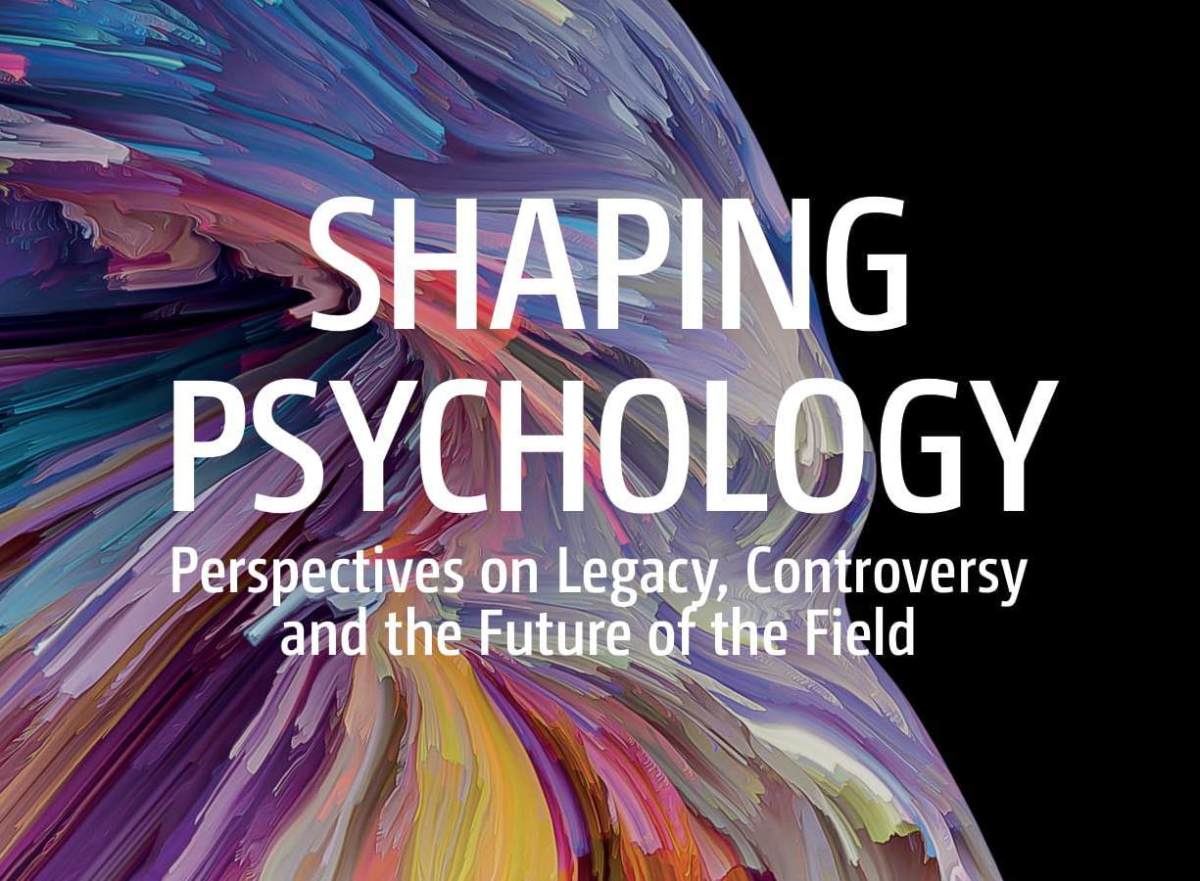
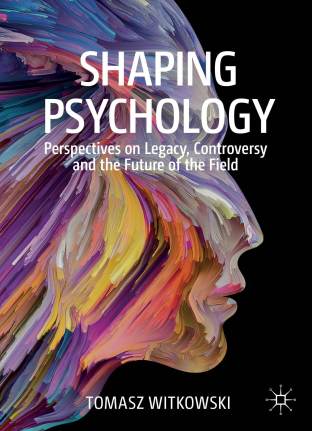
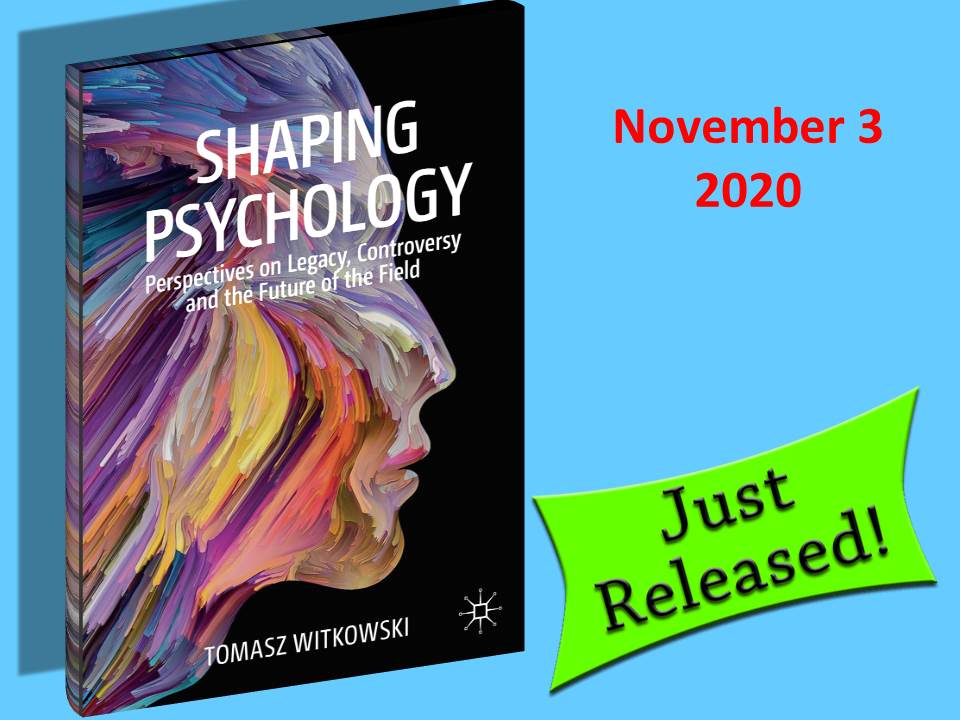
Moja najnowsza książka, „Shaping Psychology. Perspectives on Legacy, Controversy and the Future of the Field”, po dwóch latach wytężonej pracy trafiła dzisiaj do rąk czytelników. Ukazała się 3 listopada nakładem wydawnictwa Palgrave Macmillan.

Wspaniała książka, pełna nieoczekiwanych i wnikliwych odpowiedzi na dociekliwe pytania. Cała psychologia i nauka o umyśle widoczna jak na dłoni. Musisz to przeczytać. Prof. Michael S. Gazzaniga, University of California, Santa Barbara
Te entuzjastyczne słowa autora Istoty człowieczeństwa odnoszą się do mojej najnowszej książki: Shaping Psychology. Perspectives on Legacy, Controversy and the Future of the Field, która po dwóch latach wytężonej pracy trafiła dzisiaj do rąk czytelników. Ukazała się 3 listopada nakładem prestiżowego wydawnictwa Palgrave Macmillan (oficyna należąca do Springer Nature).
Shaping Psychology to angażująca i często prowokująca książka wypełniona fascynującymi spostrzeżeniami wybitnych badaczy, których prace zadecydowały o rozwoju nauk psychologicznych. Każdy, kogo interesuje przeszłość, teraźniejszość lub przyszłość psychologii powinien natychmiast przeczytać tę książkę. Prof. Daniel L. Schacter, Harvard University, autor Siedmiu grzechów pamięci
Shaping Psychology to unikalny zbiór pogłębionych wywiadów z najbardziej wpływowymi psychologami żyjącymi i pracującymi obecnie. Przeprowadzone pod koniec dekady, która wstrząsnęła psychologią, umożliwiają wgląd w kontrowersje leżące u podstaw współczesnej psychologii, prezentują zderzenie wizji tego, czym jest psychologia jako nauka i co przyniesie jej przyszłość. Rozmówcy dzielą się również z autorem refleksjami na temat swoich największych osiągnięć i wyzwań, przed jakimi stoi ta dziedzina. Są wśród nich  Noam Chomsky, Elizabeth Loftus, Daniel Kahneman, i dwunastu innych, którzy ukształtowali psychologię, jaką znamy dzisiaj. Reprezentują szeroki zakres specjalizacji, od badań naukowych po praktykę zdrowia psychicznego, od psychologii głównego nurtu poprzez psychologię krytyczną i neuronaukę aż do ruchu Open Science. Szczerze wypowiadają się na temat kryzysu psychologii analizując jego przyczyny, konsekwencje oraz sposoby przezwyciężenia. Rozmowy przybliżają również sylwetki tych wielkich myślicieli i naukowców ukazując kim są jako ludzie, ich życie i doświadczenia, które ukształtowały ich światopogląd. Badacze, praktycy, studenci, dziennikarze i każdy, kto interesuje się psychologią, nauką i historią nauki z pewnością znajdzie coś dla siebie w tej książce. Więcej o książce na stronach Palgrave Macmillan.
Świetna książka! Fascynujące szkice biograficzne i wywiady pełne wiedzy i mądrości. Gorąco polecam studentom, psychologom i szerokiej publiczności. Henry L. “Roddy” Roediger, James S. McDonnell Distinguished University Professor, Washington University, St. Louis

Giganci psychologii – okładka

Rozmowy z wybitnymi psychologami naszych czasów o przeszłości i przyszłości ich dziedziny zebrałem w książce „Giganci psychologii. Rozmowy na miarę XXI wieku”. Książka w księgarni Bonito »

Chcesz dostawać moje nowe teksty e-mailem? Zapisz się poniżej.