

Towards a Brave New World

Magazyn, który jest nieoficjalnym forum the intellectual dark web opublikował właśnie mój najnowszy artykuł poświęcony refleksjom na temat pracy i „odkryciom” takim jak work-life balance, workism czy nasza „kultura zapierdolu”. Zapraszam do lektury!

Huxley’s dystopian novel was a warning, but we are systematically moving in the direction he indicated.

Dog owners can tell when their pets are bored. They are aware of the satisfaction an animal experiences when carrying out something they learned earlier, even if it’s just coming to heel. Some dogs encourage their owners to engage in demanding activities that are sometimes difficult to even call fun. Thanks to their work, rescue dogs became heroes of the rescue operation during the earthquake in Turkey and Syria in 2023. It is not only thanks to the rewards received from their trainer that animals can perform difficult, complex, and often unnatural activities. Learning new skills and controlling one’s own behaviour, and therefore that of the environment, is associated with a level of satisfaction that is as rewarding as receiving treats and stroking.

This satisfaction is common to animals and humans. It is experienced by a child who takes his first steps, a tennis player who has mastered a new stroke, a poet who has found an apt metaphor, or a carpenter who has finished working on an exceptional piece of furniture. It was experienced by ancient hunters tracking game and gatherers storing food, farmers cultivating fields, and commanders leading troops into battle. Experiencing satisfaction from one’s own actions and their effect on reality is at least as immanent to our nature as satisfying hunger. Homo sapiens has achieved excellence through perfecting our own actions, as evidenced by the greatest works of art and achievements of science.

Understanding Satisfaction

Psychologists have long tried to understand what pushes people to such actions and why they do not give up despite the enormous effort required. One of the first empirical attempts to study this phenomenon was made in the mid-20th century by David McClelland, as a result of which he created his concept of achievement motivation, and discovered that it is the pursuit of perfection, and not external motives, that pushes people to work the hardest. What is interesting is that, during his research, he also discovered that in countries with a high intensity of achievement motivation, the economy prospers significantly better than in those where the motivation to avoid failure overrides achievement motivation. Over time, it turned out that—as Max Weber had predicted much earlier—a factor conducive to the formation of achievement motivation is the Protestant work ethic. This was indicated not only by significant differences in economic development between Protestant and Catholic countries. The researcher also discovered that in highly developed countries, fairy tales, legends, and stories told to children are much more deeply imbued with themes of striving for perfection and achievement than in those with struggling economies.
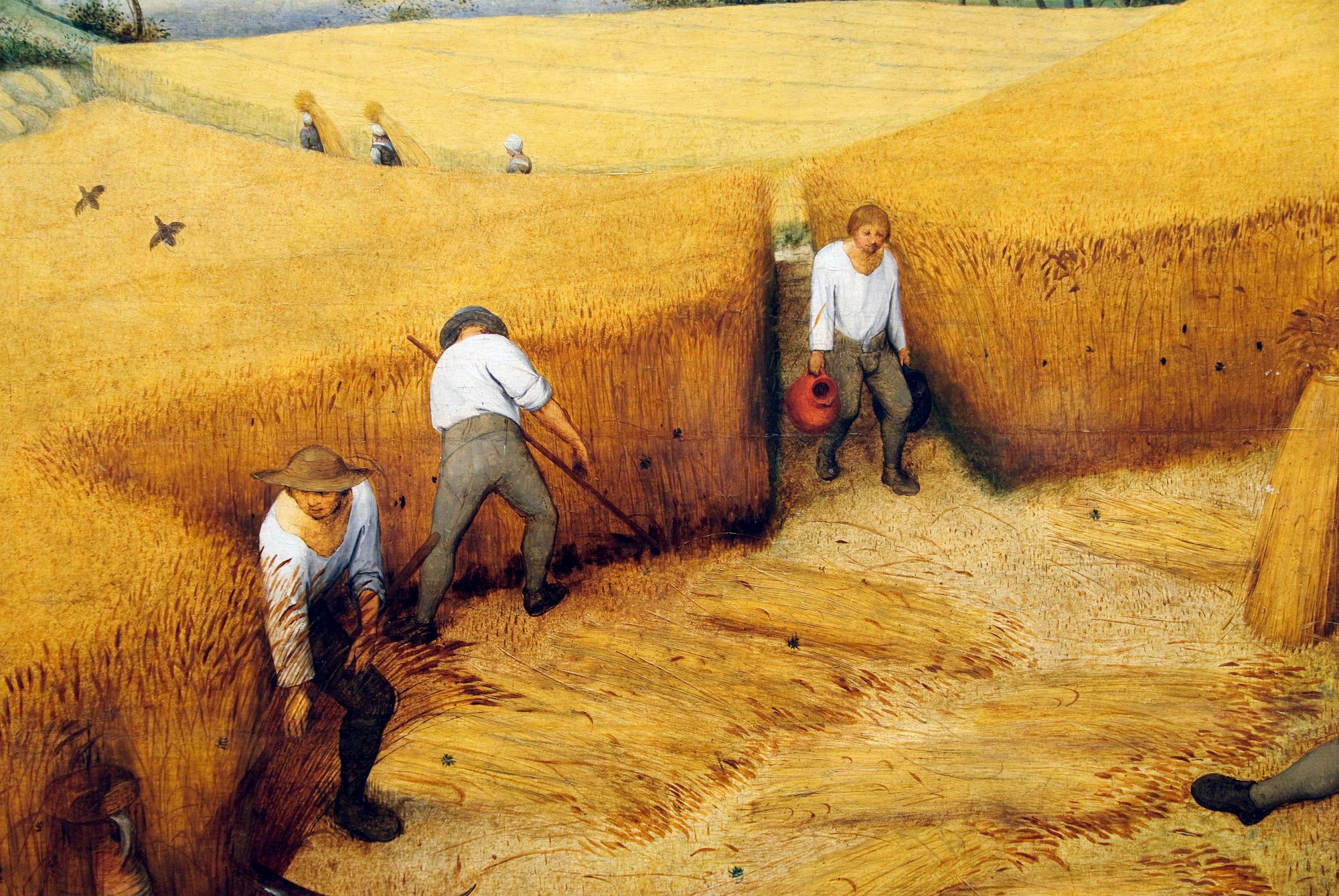
The Harvesters (1565) by Pieter Bruegel the Elder. Alamy

Counterintuitive results were obtained in huge studies on life satisfaction by Mihaly Csikszentmihalyi, the creator of the well-known “flow” concept. It turned out that, contrary to what most of us think, the source of the greatest satisfaction and positive emotions experienced in life is… work! Right behind it, in second place, is learning. The biblical verse, “cursed is the ground because of you; through toil you will eat of it all the days of your life” turned out to be a divine gift. The descendants of Adam were able to find the greatest meaning of their lives through this hardship, although Csikszentmihalyi also noticed a certain paradox. For many people, even though work is much more often a source of positive emotions than entertainment, they are also more motivated in finding ways of spending their free time. According to the researcher, a cultural stereotype is responsible for this state of affairs. The social perception of work as an indulgence and a necessary evil makes us more willing to choose activities accompanied by apathy than activities involving effort.

Another surprising result of Csikszentmihalyi’s research was the discovery that some people can find meaning in work that may on the surface seem boring, repetitive, and banal. In fact, even in forced situations (such as prison or army camp), some of the respondents were able to structure their situation in such a way that it provided them with positive emotions and they derived satisfaction from what they were forced to do. However, finding meaning in what you do is not always easy.

Czytaj dalej klikając TUTAJ.

Inne moje artykuły, które ukazały się w QUILLETTE:

The Victims’ Race

Zapobieganie samobójstwom a nauka kultu cargo


Chcesz dostawać moje nowe teksty e-mailem? Zapisz się poniżej.

The Victims’ Race

Magazyn, który jest nieoficjalnym forum the intellectual dark web opublikował właśnie mój najnowszy artykuł poświęcony kulturze ofiar, jej ewolucyjnym korzeniom i konsekwencjom społecznym. Zapraszam do lektury! The Victims’ Race

Jean-Auguste-Dominique Ingres, Roger Freeing Angelica, 1819, Wikimedia Commons

On August 2nd, 2013, 14-year-old Hannah Smith of Leicestershire, England, took her own life. She had been receiving cruel messages on the social networking site Ask.fm for months, and her parents concluded that cyberbullying was the main cause of her suicide. But then evidence emerged that the hatred Hannah had been receiving came from … herself—98 percent of the messages were posted from the IP address of the computer she was using. This tragic event inspired a research project by Sameer Hinduja and colleagues at the Cyberbullying Research Center in Florida. Their analysis of around 5,500 teenagers produced some surprising results: “We knew we had to study this empirically,” Hinduja remarked, “and I was stunned to discover that about 1-in-20 middle- and high-school-age students have bullied themselves online. This finding was totally unexpected, even though I’ve been studying cyberbullying for almost 15 years.” Boys reported digital self-harm more often (7.1 percent) than girls (5.3 percent). Asked why they participated in such behaviour, their replies included: “I already felt so bad with myself that I wanted to make myself feel even worse” and “I wanted to see if someone really was my friend.” However, there were also those who claimed that they did it to justify their aggressive behaviour towards others, or just for fun, to see how others would react. If teenagers are prepared to harm themselves in cyberspace to attain the status of victim, it should not be especially surprising that some adults do so in the real world. In the most notorious example of this behaviour, actor Jussie Smollett told police he had been the victim of a racist and homophobic attack on January 20th, 2019. He immediately found himself at the centre of media attention and public opinion. But the subsequent investigation revealed that Smollett had paid two men to assault him and that he had sent himself the threatening letters he had received the week before. This was not an isolated incident. In his book Hate Crime Hoax, political scientist Wilfred Reilly analysed 346 alleged hate crimes and found that fewer than a third were genuine. He provides detailed descriptions of almost a hundred high-profile cases that never actually happened, most of which were supposed to have taken place on university campuses. Reilly concludes that, contrary to popular belief, we are not experiencing an epidemic of hate crimes, but an epidemic of hate crime hoaxes perpetrated by people searching for public attention and sympathy. Nor is it only hate crimes that are the subject of hoaxes and false accusations. A meta-analysis conducted by Australian scholars Claire E. Ferguson and John M. Malouff in 2015 revealed that as many as 5.2 percent of all reported rape cases are false. The authors note, however, that their analysis only accounts for accusations that were disproven in the course of investigations—many others were never confirmed or were withdrawn for reasons unknown. The evolution and development of victimhood The advantages of victimhood are by no means unique to 21st-century millennials and Generation Z-ers, bored with life and addicted to social media. Indeed, they are not unique to humans. The Austrian zoologist Irenäus Eibl-Eibesfeldt has written about the discovery of an adult frigate bird with only one wing in a breeding colony, and a blind adult pelican at another breeding site. Both were mutilated long before they were found by researchers, which indicated that they’d survived by depending upon the help of other birds. Weaker, disabled animals are also sometimes used by others in a manipulative manner. Eibl-Eibesfeldt observed that male maggots would use borrowed offspring to mitigate the aggression of others. Most mammals also make effective use of the innate behavioural patterns of expressing humility and submission. Victimhood is of evolutionary importance, because it improves the chances of survival in difficult circumstances. In many different cultures, people cry and submit themselves in a similar way, not only in their movements and gestures but also in the use of similar wailing sounds. Even children born deaf and blind cry, and the body language of submission is remarkably similar across cultures—an individual signifies submission by becoming smaller, kneeling, and bowing. These gestures are sometimes accompanied by helplessness, weakness, and childlike behaviour, the aim of which is to release the protective instinct that inhibits aggression. Czytaj dalej klikając TUTAJ. Posty o podobnej tematyce:

Kultura ofiar. Kto na niej zarabia?

Wyścig ofiar


Chcesz dostawać moje nowe teksty e-mailem? Zapisz się poniżej.

Zapobieganie samobójstwom a nauka kultu cargo

Magazyn, który jest nieoficjalnym forum the intellectual dark web opublikował właśnie mój najnowszy artykuł, którego inspiracją była opublikowana w grudniu 2020 roku metaanaliza poświęcona ocenie skuteczności metod przeciwdziałania samobójstwom i samookaleczeniom. Zapraszam do lektury!

Magazyn, który jest nieoficjalnym forum the intellectual dark web opublikował właśnie mój najnowszy artykuł, którego inspiracją była opublikowana w grudniu 2020 roku metaanaliza poświęcona ocenie skuteczności metod przeciwdziałania samobójstwom i samookaleczeniom. Zapraszam do lektury!

Suicide Prevention and the Social Science Cargo Cult

When white people began visiting the islands of the Pacific Ocean, the native peoples, fascinated by the abundance of good things coming to them, assiduously observed the visitors’ behaviour. They concluded that the great birds in the sky, filled with packing cases bearing the inscription “cargo,” were gifts from the gods. So, they began to imitate the newcomers, building runways in the middle of the jungle, lighting fires based on the pattern of airport landing lights, and constructing small control towers out of wood and bamboo. Then they awaited the benevolence of the gods, but the gods were not compliant. The planes did not land on their runways, despite the enormous effort they had put into building them and the meticulousness with which they copied the buildings and equipment of the white people. Even today, this cargo cult persists in some corners of Oceania. In a speech delivered at a degree ceremony at the California Institute of Technology, Richard Feynman, a noted physicist and Nobel Prize winner in 1974, compared the social sciences to the cargo cult. Representatives of the social sciences, he argued, imitate the behaviour of other sciences but to no effect. Feynman did not end with this comparison, but added examples from the fields of rehabilitation, psychotherapy, and parapsychology. He stated that despite the enormous effort invested in researching and perfecting teaching methods, students’ results are worse every year. The same goes for criminality and the other problems which the social sciences attempt to resolve. Was Feynman right? The bustle of adherents to the cargo cult In many fields, great effort has produced paltry results and sometimes even worsened the prevailing state of affairs. In December 2020, a comprehensive meta-analysis was published covering 50 years of research into the efficacy of various interventions aimed at preventing suicide and self-harm. A research team, led by Kathryn Fox from the University of Denver and Xieyining Huang from Florida State University, analysed 1,125 of the most methodologically correct research carried out in the last half-century. Inter alia, the research considered emergency intervention, psychodynamic psychotherapy, peer support, social care, drug therapy, hospitalisation, external methods of control, cognitive and behavioural approaches, dialectical and behavioural psychotherapy, as well as other psychotherapeutic methods. The results were depressing. The efficacy of all methods examined was found to be very low, effects do not last long after intervention, and there is no real difference between the various methods. But most striking is the discovery that, despite the nearly exponential growth in the amount of research into these methods, their effectiveness today is as low as it was 50 years ago. Within the diversity of approaches, no indicators were discovered which would have a crucial influence on the effectiveness of intervention. Czytaj dalej klikając TUTAJ. Posty o podobnej tematyce:

Samobójstwo – kolejna ogromna porażka psychologii

Komputer zrozumie samobójcę

Psychology Led Astray: Cargo Cult in Science and Therapy

Is psychology a cargo cult science? – wykład wygłoszony podczas 15 Europejskiego Kongresu Sceptyków w Sztokholmie

Czy połowa wiedzy psychologicznej jest bezwartościowa?


Zakazana psychologia, t. II – okładka

O tym, jak psychologia upodabnia się do nauki kultu cargo, piszę w drugim tomie „Zakazanej psychologii. Nauka kultu cargo i jej owoce”. Książka w księgarni Bonito »

Defekt – okładka

O tym, co terapia potrafi zrobić z człowiekiem, opowiadam nie tylko jako psycholog. W powieści „Defekt” śledzę zdolnego młodego człowieka przez jego związki i kolejne terapie i pytam, co się dzieje, gdy za wszelką cenę próbujemy dopasować się do normy.

Przeczytaj fragment (EPUB)  ·  Przeczytaj rozmowę o powieści

Chcesz dostawać moje nowe teksty e-mailem? Zapisz się poniżej.