Recenzja „Fades, Fakes, and Frauds” w „The Skeptical Intelligencer”

Prof. Michael Heap, psycholog kliniczny i sądowy, sceptyk i redaktor naczelny kwartalnika wydawanego przez Association for Skeptical Inquiry – Skeptical Intelligencer zrecenzował książkę w ostatnim numerze z 2022 roku. Zapraszam do lektury!

An informed and highly readable account, the book comes at a time when its message could not be more relevant.

Znalezione obrazy dla zapytania michael heapProf. Michael Heap, psycholog kliniczny i sądowy, sceptyk i redaktor naczelny kwartalnika wydawanego przez Association for Skeptical Inquiry – Skeptical Intelligencer zrecenzował książkę w ostatnim numerze z 2022 roku. Zapraszam do lektury!

Fads, Fakes and Frauds by Tomasz Witkowski
It is always good news to announce that our Polish skeptical colleague, Dr
Tomasz Witkowski, has published another book on the theme of how the
study of the human mind and its application in real life so readily depart
from the disciplined, evidence-based approach offered by science, only to embrace fads, myths and pseudo-scientific notions and practices. Aptly titled Fads, Fakes, and Frauds, in his book Dr Witkowski provides us with a series of hard hitting, highly skeptical essays on a wide range of issues of contemporary concern. These include our understanding and treatment of mental health problems, including suicide and self-harm; placebo and nocebo in medicine; the
quality of scientific research; loneliness; victimization; and criminal justice. His aim is to demonstrate how we have come to understand and represent these issues in ways that are counterproductive rather than beneficial, and to highlight the muddling of fact, misrepresentation and self-interested fiction in conventional discourse and social policy. An informed and highly readable account, the book comes at a time when its message could not be more relevant. Dr Witkowski (note 5) is a psychologist whose previous books have been reviewed in the Intelligencer (notes 6, 7 &8). In 2010 he was awarded the title of Rationalist of the Year by the Polish Society of Rationalists. 

5. See his blog at: http://www.forbiddenpsychology.wordpress.com.
6. Shaping Psychology: Perspectives on legacy, controversy and the future of the field by Tomasz Witkowski. Palgrave Macmillan (Springer Nature: Cham, Switzerland). Reviewed by M. Heap in the Skeptical Intelligencer, 2020, 23 (4), 13-14.
7. Psychology Led Astray: Cargo cult in science and therapy by Tomasz Witkowski, Boca Raton, FL: BrownWalker Press, 2016. Reviewed by M. Heap in the Skeptical Intelligencer, 2017, 20 (1), 9-10.
8. Psychology Gone Wrong: The dark sides of science and therapy by Tomasz Witkowski and Maciej Zatonoski Boca Raton FL: BrownWalker Press, 2015. Reviewed by M. Heap in the Skeptical Intelligencer, 2015, 18 (3), 29.

Dotychczasowe recenzje tej książki:

Recenzja „Fades, Fakes, and Frauds” w Science-Based Medicine

Recenzja „Fads, Fakes, and Frauds” w SKEPTIKER


Przepędźcie guru, którzy radzą, jak żyć – okładka

Ten wątek rozwijam w zbiorze esejów „Przepędźcie guru, którzy radzą, jak żyć i inne eseje” – o tych, którzy sprzedają nam gotowe recepty na życie. Książka w księgarni Bonito »

Chcesz dostawać moje nowe teksty e-mailem? Zapisz się poniżej.

Recenzja „Shaping Psychology” w „The Skeptical Intelligencer”

Prof. Michael Heap, psycholog kliniczny i sądowy, sceptyk i redaktor naczelny kwartalnika wydawanego przez Association for Skeptical Inquiry – zrecenzował książkę w ostatnim numerze z 2020 roku. Zapraszam do lektury!

Tomasz Witkowski proves to be an able interviewer, very knowledgeable and well informed about psychological and philosophical matters.

Znalezione obrazy dla zapytania michael heapProf. Michael Heap, psycholog kliniczny i sądowy, sceptyk i redaktor naczelny kwartalnika wydawanego przez Association for Skeptical Inquiry – Skeptical Intelligencer zrecenzował książkę w ostatnim numerze z 2020 roku. Zapraszam do lektury!
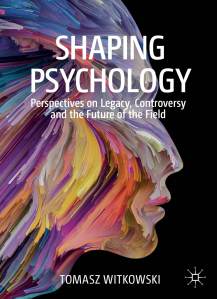
 

Shaping Psychology: Perspectives on Legacy, Controversy and the Future of the Field by Tomasz Witkowski. Palgrave Macmillan (Springer Nature: Cham, Switzerland), 2020, pp332 + references.

________________________________________________________________________

Reviewed by Michael Heap

The author of this book, Tomasz Witkowski, is a psychologist and a founding member of the Polish Skeptics Club. He is the author of a previous book (note 1) criticising the status of academic and applied psychology, which I reviewed in the Spring 2017 issue of the Skeptical Intelligencer. Prior to that he co-authored, with his colleague Maciej Zatonoski, another account of the numerous failings and scandals that have plagued psychology over the years (note 2). This was reviewed in the Autumn 2015 issue. In the present volume, Witkowski continues the theme in the form of interviews with experienced and eminent contributors to the field of psychology. Amongst the issues about which he is most concerned are the quality, utility and validity of much of the research being published nowadays; the ‘replication crisis’; the efficacy of many psychotherapeutic practices that psychologists seem willing to embrace; and the failure of psychologists to mount a sufficiently strong challenge to their psychiatric colleagues’ fetish for diagnostic labelling. However, the main content of most of the chapters is a discussion of the interviewee’s personal history and contribution to psychology over the course of their working lives.

A total of 15 individuals were interviewed. The author first approached a larger group (he tells us that he ‘placed significant stock on the 2002 ranking titled “The 100 most eminent psychologists of the 20th century”)’ and those interviewed are the ones who agreed to participate. Consequently, the contributors are both author-selected (with the above assistance) and self-selected, meaning that on another occasion, with another author, maybe a somewhat different sample would have emerged, with different interests, opinions and ideas about future trends and requirements. The author acknowledges this in his Introduction, but I think it fair to say that, overall, the picture that emerges from the book is quite representative of the discipline as a whole. Nevertheless, only four of the contributors are women. There is also the predictable American bias (inevitable if the content is to be representative).

__________________________

Tomasz Witkowski proves to be an able interviewer, very knowledgeable and well informed about psychological and philosophical matters.

__________________________

Several contributors will be familiar to skeptics. Elizabeth Loftus is amongst them. Many readers will be familiar with her influential work on the fallibility of memory, notably in relation to eyewitness testimony and ‘recovered memories’ of sexual abuse in childhood. Readers will be dismayed by the level of personal and professional abuse that Professor Loftus has had to endure (believe me, psychotherapists are not necessarily the most agreeable, rational, and well-adjusted of people). Another such contributor is the recently deceased (and much missed) Scott Lilienfeld, who was very thorough and prolific in his criticism of the psychotherapy industry (but gives due acknowledgement to those therapies that are evidence-based). Then there is our very own Susan Blackmore, known for her early zeal for investigating the paranormal, only eventually to conclude that there appears to be nothing there to investigate. In her interview she focuses on her later work on consciousness and memes. Next we have Daniel Kahneman, one of the most influential psychologists of our time, celebrated by skeptics for his work on cognitive biases. Brian Nozec also agreed to participate; in 2013, he co-founded the Centre for Open Science and directs its Open Science Framework, an online service where scientists can preregister their research and other of activities, with a view to promoting higher standards. Finally, there is an interview with the very prolific science writer and author Carol Tavris. Despite not being a researcher at a university, she ‘figures on a list of the 50 greatest living psychologists’. Dr Tavris writes about skepticism generally and sex-differences and feminism in particular, and she pens the Gadfly column for the US Skeptic.

It is fair to say that if you are a seasoned skeptic you will probably be familiar with much of the factual content of the above chapters (though not necessarily the others) but you will be keen to hear the views of these people concerning the current status of academic and applied psychology and future developments (likely and desirable). This is true of all the interviewees and we also hear some interesting accounts of their personal lives and what drew them to their field of study. A common pattern across chapters is the confidence and even pride shown by each contributor in his or her chosen area of research, often coupled with criticism of those who have taken an alternative perspective. This is to be expected, as are the differing responses to questions about what have been the most important contributions of psychology so far and what we should expect or wish for in the future. Cognitive neuroscience is a common theme when the latter question is asked. The interviewer also has a list of concerns about the present status of psychology, but the participants vary in the extent to which they share these concerns, some being more sanguine than the interviewer. I should mention that amongst the contributors not listed above, but one who will be familiar to many skeptics, is Noam Chomsky, not a psychologist of course but someone which has been of great influence in the field of psycholinguistics (he was a key figure when I undertook my BSc in Psychology 50 plus years ago). Chomsky’s interview is interesting to me for his reticence as much as anything else. He was reluctant to be drawn on some of the controversies raised (with the exception of world politics and capitalism), sometimes remarking that he was not sufficiently informed to comment. Fair enough, I suppose.

Whilst nowadays there is no shortage of interviews of eminent people that are easily accessible on the internet, I think there is still much to be said for the medium of the written word for these purposes (note 3). The amount and diversity of the discussion that a book provokes is a measure of its success and I could certainly write many pages discussing matters raised by each of the interviewees and my own reactions. One thing Shaping Psychology does achieve, in my opinion, is that whatever the reader’s background, it gives him or her a very good, up-to-date insight into what is happening in academic psychology and applied psychology at the present time. It is very readable (there is one exception, which I shall not name or comment on here—I’ll leave this to readers of the book) and any of the chapters is worth re-reading and studying in depth. Tomasz Witkowski proves to be an able interviewer, very knowledgeable and well informed about psychological and philosophical matters (I confess to doing the occasional Google search to understand a point that was being discussed, when I really ought to have known about it).

__________________________

Where is the wisdom we have lost in knowledge?

Where is the knowledge we have lost in information?

T.S.Eliot

__________________________

More than one of the contributors (e.g. Robert J. Sternberg, who has some useful things to say about intelligence) refer to ‘wisdom’ and the need for psychology to be informed and directed by this rarely-mentioned human faculty. Just recently I was reading a book, one chapter of which opened with a quotation from T.S. Eliot’s, poem ‘Chorus from the Rocks’:

Where is the wisdom we have lost in knowledge?

Where is the knowledge we have lost in information?

We do indeed live in an age when, because technology enables us to gather and store so much information, this becomes an end in itself without regard to how much we need the information and how it is to be used to benefit us and the world in which we live. So I cannot help relating this quotation to the issues that are addressed in Sharing Psychology (and to research generally, education, the media—popular and academic—the internet, and many other facets of our lives).

I am very happy to recommend Shaping Psychology to readers of the Skeptical Intelligencer.

Notes

  1. Psychology Led Astray: Cargo Cult in Science and Therapy. Tomasz Witkowski, Boca Raton, FL: BrownWalker Press, 2016.
  2. Psychology Gone Wrong: The Dark Sides of Science and Therapy. Tomasz Witkowski & Maciej Zatonoski, Boca Raton FL: BrownWalker Press, 2015.
  3. Coincidentally, I have just acquired a book that came out 27 years ago entitled States of Mind: Conversations with Psychological Investigators, edited by the late Jonathan Miller and published by the BBC (it is based on a TV series). There are 15 conversations with people who at that time had achieved some eminence in psychology. There is only one woman (Hanna Segal). It will be interesting to compare the contents with those of Shaping Psychology.

Michael Heap is a retired clinical and forensic psychologist.

 

Recenzja mojej książki w „The Skeptical Intelligencer”

Prof. Michael Heap, psycholog kliniczny i sądowy, sceptyk i redaktor naczelny kwartalnika wydawanego przez Association for Skeptical Inquiry – zrecenzował książkę w pierwszym tegorocznym numerze. Zapraszam do lektury!

Psychology Led Astray to dobrze i przystępnie napisana książka oparta na gruntownie przeprowadzonych badaniach. Trudno przecenić znaczenie tematu, który porusza.
Znalezione obrazy dla zapytania michael heapProf. Michael Heap, psycholog kliniczny i sądowy, sceptyk i redaktor naczelny kwartalnika wydawanego przez Association for Skeptical Inquiry – Skeptical Intelligencer zrecenzował książkę w pierwszym tegorocznym numerze. Zapraszam do lektury!  

Psychology Led Astray: Cargo Cult in Science and Therapy by Tomasz Witkowski, Boca Raton, FL: BrownWalker Press, 2016, pp 276 + xiii. ISBN-10: 1-62734-609-0; ISBN-13: 978-1-62734-609-2.

What is going wrong with Psychology and why is it so vulnerable to so many unproven, unscientific and all-too-often weird ideas and practices? ______________________________________________________________________________________________________ Reviewed by Michael Heap Speaking as someone who has worked as a psychologist for the last 47 years it may come as no surprise for me to defend psychology as a worthy field of study. Like all disciplines it is vulnerable to quirky ideas, questionable practices, and pseudoscientific claims, but more so than the hard sciences because of the nature of the subject matter, about which everyone can have his or her opinions and theories, some of them strongly held. A Psychology degree, thousands of which are handed out annually by universities, in itself offers no guarantee that the holder is endowed with the discipline required to adhere to a rational understanding of the human mind, its capabilities and its afflictions. Psychological research is particularly vulnerable to a malaise that is now acknowledged to affect many fields of study involving human subjects, namely unreliability; experiments and other forms of investigation are often badly designed and conducted, and the results poorly analysed and improperly interpreted. One force responsible for this lamentable state of affairs is the requirement on most university staff to maintain a decent flow of research publications. Hence convenience will play an important role in choice of research topics and human volunteers to be studied (usually undergraduate students). The inevitable result is that thousands of research papers in hundreds of journals are published annually, most are hardly ever read, and what limited attempts are made to replicate the findings all too often end in failure. Applied psychology (clinical, educational, forensic, occupational, etc.) is no less a dodgy business, more revealingly so in the present climate of accountability to a strong and reliable evidence base. All of this does not discredit Psychology as an academic and applied discipline, vital in the prospectus offered by any university worth its salt, likewise in medical and educational services, civil and criminal justice systems, and many other important spheres of public life. But Psychology is something people do and when it goes seriously wrong it is largely because of the way people are doing it and the political, social and economic contexts in which they operate. The author of Psychology Led Astray would agree, I am sure, with the above sentiments. Tomasz Witkowski is himself a psychologist (and a founding member of the Polish Skeptics Club) who, with his colleague Maciej Zatonoski, has already published a highly critical account of the numerous failings and scandals that have plagued psychology over the years (note 1). In fairness, as is the case with the present book, some of the topics covered could equally well have been included in a book titled ‘Psychiatry Led Astray’. Also some of the dubious and even harmful therapeutic practices that are discussed would receive short shrift from most mainstream psychologists, psychiatrists and medical practitioners in general. But not all of them, it seems, and there are cultural and national variations in the extent to which this is so. The material covered in the book is divided into three parts. Part I asks the question ‘Is Psychology a Cargo Cult Science?’ and is a critique of important ways in which modern psychology has developed. The term ‘cargo cult’ was used in an address by physicist Richard Feynman in 1974 at the California Institute of Technology as a criticism of contemporary social sciences. He compared the ways in which social scientists emulate their colleagues in the physical sciences to the cargo cults that developed amongst people in the South Seas during and after World War II through their contact with the west. For example, having witnessed aeroplanes landing and bringing lots of desirable cargo to their islands, they made their own runways and lit fires along the sides, constructed airports made of wood, radios made of coconuts and straw, and so on. Of course any hoped-for material benefits of doing all this never appeared (note 2). The chapters in Part I largely concern the failings of modern psychological research as I have briefly outlined in the first paragraph of this review. There is also a chapter on research into stress and its supposedly deleterious effect on physical health. The gist is that the most well-constructed research suggests that claims for such a link (which seem to represent current orthodoxy) are at least overblown and may even have been discredited. Informed readers may be divided on this assertion. A particular point that the author makes made me sit up. It is that, at least from the standpoint of research, Psychology has all-but ceased to be the Science of Behaviour. The basis for this claim is the declining number of research papers that involve the direct observation of behaviour. The author quotes social psychologist Roy Baumeister lamenting the decline in research papers in which observable behaviour is the dependent variable in favour of those using introspective measures and scores on questionnaires. Several reasons are cited and Witowski includes convenience and the demands on researchers to be prolific in their publications (see my earlier comments. I was pleased (because I have often pondered on this paradox) to read the author’s remarks about how the growth in the number of professionals and the resources dedicated to the needs of people with mental health problems has been matched by an increase in the number of people diagnosed with these problems. Naively one would predict that the former would lead to a decline in the latter. A range of dubious, unsupported and discredited (though still thriving) treatments and therapeutic practices and diagnostic categories are covered in Parts II and III of the book (Part III being devoted to children’s problems and needs). Throughout these sections the author repeatedly returns to the analogy of cargo cults, which some readers may feel is somewhat overworked at times. The material covered in Part II comprises the following: the syndrome known as ‘adult children of alcoholics’; the Simonton visualisation method for cancer patients; and psychological debriefing following trauma (which research has revealed to be more harmful than beneficial). The section ends with a chapter titled ‘Experimental therapy patient’s handbook’; this provides guidelines for people who are considering undergoing some form of therapy. The chapters in Part III cover the Doman-Delacato for the treatment of neurodevelopmental disorders and other children’s disabilities; the pseudoscience of educational kinesiology (‘Brain Gym®’); certain ‘attachment therapies’, including holding therapy; and dolphin therapy. Psychology Led Astray is a well-written, readable and thoroughly researched book. Two criticisms are that, as with Psychology Gone Wrong, there is no index and the referencing system could be more reader-friendly. Nevertheless, the importance of its subject matter is difficult to overstate. Anyone who is concerned, however remotely, with the study of human psychology and the treatment of psychological difficulties and disorders (and this includes potential patients and their families – i.e. just about anyone) should familiarise themselves with the information in this book. Note
  1. Tomasz Witkowski and Maciej Zatonoski (2015) Psychology Gone Wrong: The Dark Sides of Science and Therapy, Boca Raton FL: BrownWalker Press. (Reviewed in the Skeptical Intelligencer, 19, 2018 (3), 1.
  2. I personally think that the metaphor is very apt when comparing the diagnostic classification systems of psychiatry with those of medicine generally, something covered by the author in his first chapter.

Zakazana psychologia, t. II – okładka

O tym, jak psychologia upodabnia się do nauki kultu cargo, piszę w drugim tomie „Zakazanej psychologii. Nauka kultu cargo i jej owoce”. Książka w księgarni Bonito »

Chcesz dostawać moje nowe teksty e-mailem? Zapisz się poniżej.