Fragment mojej najnowszej ksiażki w „The Skeptic”

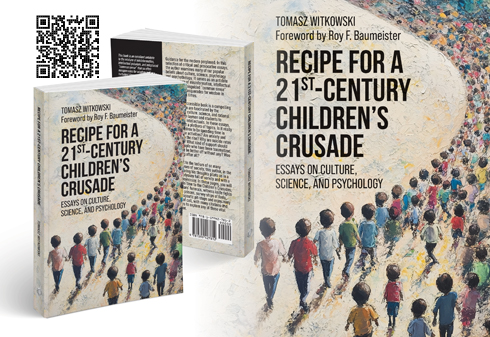
The Werther effect: a recipe for a 21st-century Children’s Crusade

This piece contains in-depth discussion of the prevalence of suicide among young people.

In May 1212, 12-year-old Stephen of Cloyes announced to the world that Jesus Christ had authorised him to organise a crusade to the Holy Land. He drew crowds of children with him, all traveling south. Most of them were boys from peasant families, but there were also some sons of the nobility. Some had run away from home, others had left with the family’s blessing. A group of girls and a number of young priests and adult pilgrims also joined them.

Stephen persuaded at least 3,000 children to take part in the crusade, although some sources say it may have been as many as half a million. Many of them died on the way due to hunger and the extreme heat. When they reached Marseilles, the sea did not part as Stephen had prophesied, and so some of the discouraged participants returned home. As for those who remained, a cunning merchant offered to transport them to the Holy Land in his seven ships. Two of them sank, and the passengers of the other five were sold into slavery to the Saracens.

When news of Stephen’s crusade reached Germany, shortly after it set out, Nicholas of Cologne gathered an army of local children ready to go south. This was a significantly smaller group, numbering “only” 12,000. When they reached the shore, the sea refused to part for them too. They decided to wander on until they reached the place where the miracle was prophesied to take place. A few returned, but the others were never heard of again.

Epidemic of suicides

The history of the Children’s Crusades is invaluable as the pretext for a thought experiment which can provide us with a better insight into the present. After all, as the universal but irrefutable wisdom has it, those who do not learn from history are doomed to repeat it. So, let us consider a few questions: why did children go on crusades in the 13th century? Why were there no such crusades either earlier or later in our history? Why did those crusades start from France and Germany, and not from, say, Poland or Scandinavia? Why aren’t they happening today? And the most important question: what social elements in play at the beginning of the 13th century should be eliminated to prevent such tragic crusades?

More than 800 years after the Children’s Crusades, we are experiencing what we have generally come to call an epidemic of suicide among children and adolescents. Three decades ago, the gravest public health threats to teenagers in the United States came from binge drinking, drunk driving, teenage pregnancy and smoking. These have since fallen sharply, replaced by a new public health concern: soaring rates of mental health disorders and suicide attempts. For people aged 10 to 24, suicide rates, stable from 2000 to 2007, leaped 57.4% from 6.8 per 100,000 in 2007 to 10.7 in 2018. Between 2007–2009 and 2016–2018, suicide rates increased significantly in 42 states. In the 10 years leading up to the Covid pandemic, suicidal thoughts and behaviours increased by about 40% among young people, according to the Centers for Disease Control and Prevention. A study published in 2023 found that 22% of teenagers had considered attempting suicide in the past year, of which female students accounted for more than twice the attempts by male students.

This epidemic of suicide is not just an American problem. In Europe, suicide is the second most common cause of death among adolescents aged 15 to 19. Tragically, almost 1,200 children and adolescents aged 10 to 19 end their own lives every year, which is an estimated three lives per day lost to suicide in Europe.

A record number of suicide attempts by children and adolescents was noted in Poland in 2022. The number of suicide attempts in this country has been growing significantly since 2013 (except for 2020). However, the recent increase is shocking. While in 2020 there were 843 suicide attempts made by children, in 2021 this figure was as high as 1,496. It is interesting to note that the number of suicide attempts ending in death has been decreasing at the same time. Just for an example, in 2013, 148 children killed themselves, while in 2020 the figure was 107. An increase was again recorded in 2021, when the figure rose to 127.

Disturbingly, the number of suicide attempts in 2020 by children aged seven to 12 was 29, but in 2021 this figure had increased to 51. Currently, about 6% of deaths among children and adolescents under the age of 18 are suicides. Fortunately, in the zero to six age group, there have been no recorded suicide attempts resulting in death since 2013, although psychologists report that recently children aged as young as six have begun to report suicidal thoughts.

It is difficult to obtain reliable historical data which could be used for comparison, but the few studies that appeared at the turn of the nineteenth and twentieth centuries and later, before World War II, show that these numbers were significantly lower, at least in Europe. However, it is worth noting that the phenomenon of suicide among children and adolescents, although not as intense as it is currently, has always been an element of social reality. The increase in these depressing indicators is accompanied by an increasing number of studies whose authors are looking for possible reasons for this state of affairs, as well as ways to counteract these unfavourable trends.

Chcesz dostawać moje nowe teksty e-mailem? Zapisz się poniżej.

Fragment mojej najnowszej ksiażki w „The Psychologist”


Repairing the child in a therapeutic pit stop

Children aren’t coloring books. You don’t get to fill them with your favorite colors.

―Khaled Hosseini

Sometime before the pandemic, a journalist asked me: „How much time should children spend in extracurricular activities?” Whilst I know it is impolite to answer a question with another question, here I made an exception to the rule in an attempt to discover any hidden meanings in her question. „And how many hours a day do you think slaves should work?” I retorted. In the thoughtless request for advice on the amount of time children should spend in extracurricular activities, there is the assumption that they are actually necessary, and that such activities serve children and contribute to their well-being, that they are better than the company of parents, grandparents and the playground, that they will help them get a better position in the future, and so on. However, both this well-being and the position in the future are measured by a set of values which we have accepted, and no objective measure can be applied to them. Perhaps in a few decades’ time someone will find this question just as absurd as a discussion of the number of hours a slave should work, given the fact that one human is enslaved by another. But no one noticed this absurdity until a few hundred years ago. Perhaps they were seeking a rational answer to such a question, based on science and experience, and which was economically justified, just as today we are looking for an answer to the question of how much we can permissibly burden our children with.


The luxury of a shared meal

Intensifying childhood is a relatively new trend in our cultural landscape. This shift may have been documented for the first time, at least in the U.S., by a nationwide survey of time diaries conducted by the University of Michigan’s Survey Research Center between 1981 and 1997. Over the 16 years covered by the study, children lost 12 hours a week of their free time. Of these, they spent three hours less on play and six hours less on spontaneous outdoor activities. During the same period, the time spent on organized sports activities doubled, and so-called passive entertainment (watching siblings and other people playing or doing something) increased six-fold, from half an hour a week to over three hours. The time spent on homework also increased by 50 percent. By contrast, conversations between parents and children, during which nothing else is done, almost completely disappeared from the timetable of family life. [i]

In another nationwide study conducted in the U.S., it turned out that the number of families who declare that they regularly eat dinner together has decreased by one-third. [ii] Perhaps this wouldn’t be so alarming, were it not for the fact that there is a strong connection between regular family meals and many other positive aspects of life, such as: academic success, psychological adjustment, lower rates of alcohol and drug use, avoidance of premature sexual behavior and fewer suicide attempts. A lack of regular family meals was associated with a higher risk of failure in all these areas. More time spent eating together at home was found to be the strongest predictor of more positive outcomes and fewer behavioral problems. This factor had a much stronger impact than time spent in school, studying, going to church, playing sports, or artistic activities. The results were similar for all types of families, and regardless of income level. [iii]


Parenting as a product development project

The world of market values and hypercompetitive adults seems to have invaded the family. Parents love their children as much as previous generations, but bring them up in a culture that defines a good parent as a provider of opportunities in our competitive world. Parenting has become a „product development project,” and insecure parents never know if they’ve done enough to achieve this end. Allocating and organizing time and providing external stimulation makes parents aware that their children are in the game, and they can get on with their own work.

This trend, outlined briefly above, was not a historical peculiarity of American culture in the late 20th century. It was initiated, gained momentum and still continues to grow in most Western societies, although it may not be studied as intensively as in the U.S.. In a survey conducted in 2017 by Mental Health America, adolescents aged 11 to 17 were asked about their sources of greatest stress. 61 percent replied that it was juggling their priorities (school, sport, work, activity in various types of clubs, etc.). [iv] Another survey in the same year found that 78 percent of children aged nine to 13 complained about a lack of free time. [v]

The period of the pandemic was a kind of intermission in this race. Some families used the excess free time to tighten and strengthen mutual relations, whilst in others, as a result of the loss of routine patterns of everyday activities, a kind of anomie occurred as existing goals and values were called into question. There were also families in which, as a result of isolation, violent tendencies took on unprecedented proportions.

Increasing demands on children has an impact on their mental well-being. Overburdened, they are increasingly less able to cope with the pace of life imposed on them, and the alarming growth in the number of diagnosed mental disorders, self-harm and suicide attempts indicates that by escalating our expectations of them, we have probably already hit the ceiling. [vi]


Therapeutic pit stops

However, what would our self-satisfied civilization be if it did not propose an essentially absurd solution? After all, just like a Formula 1 car, a person operating in hypercompetitive conditions needs a pit stop to make any necessary repairs. So what could be simpler than to just pop into the therapist’s consulting room for an hour or so when facing the next lap? Maybe to the psychiatrist for some psychotropic drugs? Or maybe to a personal coach who will make the correct tuning?

We offer therapeutic pit stops both for those children deprived of shared family meals, conversations with parents, and running from one extracurricular activity to another, as well as for those experiencing violence at home or in the environment in which they are living. The chorus of voices calling for the employment of legions of psychologists and therapists in schools and for increasing spending on child psychiatry shows no sign of abating. Children who do not do well in the race which they have been forced to enter are taken to the therapist’s consulting room, where they are to be restored to fitness for further participation in the race. A very dangerous assumption is hidden in this approach, and that is that the problem lies in the psyche of the young patient. In all this madness, rarely does a sober voice suggest that it would be better to fix what is causing the problems — the environment.

Moreover, such a voice rarely breaks through the marketing jargon of the therapeutic culture in which we have been living for at least several decades. The dogma assumes that repairing alleged defects of the psyche should be dealt with by professionals, and this fits perfectly with the expectations of the many interested parties. Mental health providers inherently do not see the benefit in offering cheap and sustainable solutions to problems. If, instead of a diagnosis of ADHD and a prescription for Ritalin, they improved the environment in which the child lives, both they and pharmaceutical companies would lose a client who promises at least a dozen or so years of dependence on their products and services. Similarly, therapists extending a helping hand are more interested in the time that patients spend in their consulting rooms, analyzing, for example, their childhood problems as well as their emotions, than the time that is devoted to shared meals in their family home.

If problems affect the child, entrusting them to the care of professionals is also often convenient for parents. Firstly, they gain a false conviction that their offspring will be taken care of by people competent and experienced in dealing with similar cases, and secondly, such a solution does not interfere with involvement in their own race. They do not have to change their customs and habits. Only one minor additional requirement appears in their lives, and that is to deliver their small patient to a certain address from time to time. The children themselves have the least to say, in accordance with the old saying that „children should be seen but not heard.”


Zawracanie statków głupców i inne eseje – okładka

Szerzej o tym, jak ideologia wypiera naukę, debatę i zdrowy rozsądek, piszę w zbiorze esejów „Zawracanie statków głupców i inne eseje”. Książka w księgarni Bonito »

Chcesz dostawać moje nowe teksty e-mailem? Zapisz się poniżej.
„Psychology Gone Wrong” na liście bestsellerów niemieckiego portalu „Bucher World”

Miło mi poinformować, że moja książka napisana wspólnie z Maciejem Zatońskim Psychology Gone Wrong. The Dark Side of Science and Therapy trafiła na listę bestsellerów niemieckiego portalu Bücher World w kategorii psychologia kliniczna plasując się na 51 miejscu.

Miło mi poinformować, że moja książka napisana wspólnie z Maciejem Zatońskim Psychology Gone Wrong. The Dark Side of Science and Therapy trafiła na listę bestsellerów niemieckiego portalu Bücher World w kategorii psychologia kliniczna plasując się na 51 miejscu. Cieszy nas to zainteresowanie czytelników, szczególnie, że angielskojęzyczne książki należą do zdecydowanej mniejszości na tej liście. Pełna lista tutaj:

Bestseller im Genre Klinische Psychologie


Zakazana psychologia, t. I – okładka

O psychoanalizie, pseudoterapiach i szarlatanerii w psychologii piszę w pierwszym tomie „Zakazanej psychologii. Pomiędzy nauką a szarlatanerią”. Książka w księgarni Bonito »

Chcesz dostawać moje nowe teksty e-mailem? Zapisz się poniżej.

Recenzje „Psychology Gone Wrong” i „Psychology Led Astray” w „Skeptikerze”

Dla tych wszystkich, którzy znają język niemiecki, zamieszczam recenzje moich książek autorstwa Rouvena Schäfera opublikowane w periodyku SKEPTIKER. Aby je przeczytać wystarczy kliknąć na link zamieszczony pod okładką.

Czas na porządki

Psychology Gone Wrong Skeptiker Review

Hard, but factually, the authors go to court with some developments in psychology. Their concern is cleaning up the house of psychological science. Thus, this book also serves as a declaration of love to science. It enriches the assortment of the skeptical book market, and even though it doesn’t always present solutions, it helps raising the reader’s awareness of errors and undesirable developments.
Rouven Schäfer, Skeptiker 2/2016

Lądowanie w dżungli

Psychology Led Astray Skeptiker Review

The author is clearly interested in an evidence-based psychology as the next development step of this rather young science. Many people wouldn’t approve of his criticism, but Witkowski’s strength lies in questioning popular assumptions on top of a high level of reflectivity.
Well researched, skeptical and enjoyable to read.
Rouven Schäfer, Skeptiker 3/2017

Zakazana psychologia, t. II – okładka

O tym, jak psychologia upodabnia się do nauki kultu cargo, piszę w drugim tomie „Zakazanej psychologii. Nauka kultu cargo i jej owoce”. Książka w księgarni Bonito »

Chcesz dostawać moje nowe teksty e-mailem? Zapisz się poniżej.

Psychology Gone Wrong: The Dark Sides of Science and Therapy


Zakazana psychologia, t. I – okładka

O psychoanalizie, pseudoterapiach i szarlatanerii w psychologii piszę w pierwszym tomie „Zakazanej psychologii. Pomiędzy nauką a szarlatanerią”. Książka w księgarni Bonito »

Chcesz dostawać moje nowe teksty e-mailem? Zapisz się poniżej.

Bezpłatne egzemplarze moich książek w iTunes!

Image result for now available on itunes Z radością informuję , że od kilku dni moje książki dostępne są w iTunes. Z tej okazji od wczoraj pierwsze 10 osób, które przeczytały  Psychology Gone Wrong i prześlą na Fan Page na Facebooku krótką, unikalną recenzję książki, otrzymają niepowtarzalny kod przy pomocy którego będą mogły pobrać bezpłatnie z iTunes egzemplarz Psychology Led Astray! Podobnie pierwsze 10 osób, które przeczytały Psychology Led Astray i prześlą na  Fan Page na Facebooku krótką, unikalną recenzję książki, otrzymają niepowtarzalny kod przy pomocy którego będą mogły pobrać bezpłatnie z iTunes egzemplarz Psychology Gone Wrong! Oferta ważna tylko do 6 kwietnia, 2017 r.
Zakazana psychologia, t. I – okładka

O psychoanalizie, pseudoterapiach i szarlatanerii w psychologii piszę w pierwszym tomie „Zakazanej psychologii. Pomiędzy nauką a szarlatanerią”. Książka w księgarni Bonito »

Chcesz dostawać moje nowe teksty e-mailem? Zapisz się poniżej.

Moja rozmowa z „The European Skeptics Podcast”

nowy-obrazThe European Skeptics Podcast zaprosił mnie do rozmowy poświęconej powstaniu i działalności Klubu Sceptyków Polskich, organizacji 17 Europejskiego Kongresu Sceptyków we Wrocławiu, moim książkom, pseudonauce w psychologii i planom na przyszłość. Rozmowa została nagrana i opublikowana TUTAJ jako 60 podcast. Rozmowę prowadzili ze mną Andras G. Pinter, Jelena Levin i Pontus Bockman, za co w tym miejscu serdecznie im dziękuję. Zapraszamy do wysłuchania całej rozmowy!  

O czym rozmawialiśmy

Rozmowa w 60. odcinku The European Skeptics Podcast (luty 2017). Mówiłem o moich książkach „Psychology Gone Wrong” i „Psychology Led Astray”, o Klubie Sceptyków Polskich i o przygotowaniach do 17. Europejskiego Kongresu Sceptyków we Wrocławiu. W tym samym odcinku prowadzący omawiali rozwój ruchu antyszczepionkowego w Europie.


Zakazana psychologia, t. I – okładka

O psychoanalizie, pseudoterapiach i szarlatanerii w psychologii piszę w pierwszym tomie „Zakazanej psychologii. Pomiędzy nauką a szarlatanerią”. Książka w księgarni Bonito »

Tryptyk haniebny – okładka

Szarlatani nie narodzili się w XXI wieku. W powieści „Tryptyk haniebny” cofam się do czternastowiecznej Europy Środkowej, do pracowni alchemika, który obiecuje kamień filozoficzny, i pytam, czy to poszukiwanie doskonałości, czy genialne oszustwo.

Przeczytaj prolog (PDF)  ·  Przeczytaj rozmowę o powieści

Chcesz dostawać moje nowe teksty e-mailem? Zapisz się poniżej.

O moich książkach w „The Psychologist”

Q&A – Tomasz Witkowski

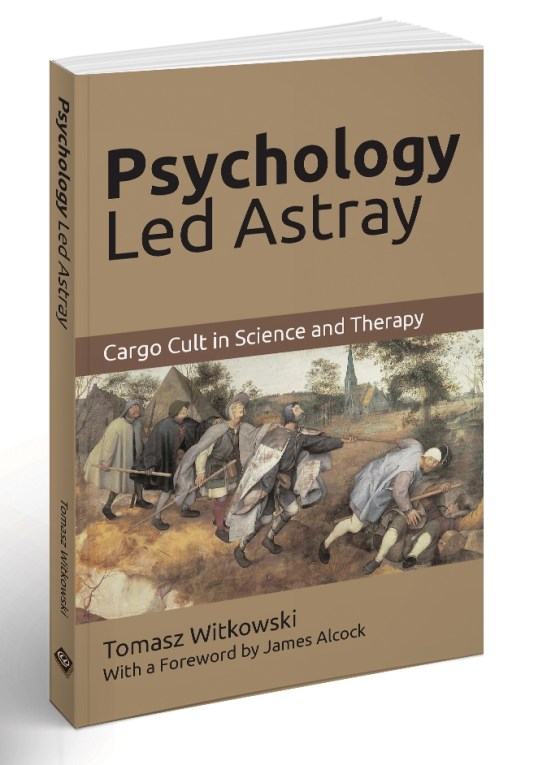
Rebecca Stack, Associate Editor for Books, speaks to Tomasz Witkowski, the author of Psychology Led Astray: Cargo Cult in Science and Therapy.
Tell me a bit about yourself and how you came to write this book. I am a psychologist, who for has many years worked at two Polish universities and two in Germany. However, amassing points for publishing research on problems of little significance, conference ‘tourism’, and scrambling up the academic career ladder are not what I wanted to devote my life to. So I began to write books popularising psychology and to work with business. About 10 years ago I decided to write a modest book devoted to some of the myths prevalent in the teaching and understanding of psychology which I had notoriously come up against. This was partly for my own benefit, to categorise and brush up my own knowledge. It really was intended to be a modest little book, but during the course of writing the amount of material increased at an alarming rate as I uncovered more and more distortions and pseudoscience in what we usually call psychology. When the book had already reached over 400 pages, and I had used barely a third of the available material, I decided to publish it as Psychology Gone Wrong: The Dark Sides of Science and Therapy, the first volume of a trilogy. Psychology Led Astray is the second volume of this trilogy. Read more…

Zakazana psychologia, t. II – okładka

O tym, jak psychologia upodabnia się do nauki kultu cargo, piszę w drugim tomie „Zakazanej psychologii. Nauka kultu cargo i jej owoce”. Książka w księgarni Bonito »

Chcesz dostawać moje nowe teksty e-mailem? Zapisz się poniżej.

Prof. Scott Lilienfeld o „Psychology Led Astray”

 Jeden z najbardziej znanych na świecie sceptycznych psychologów, prof. Scott Lilienfeld tak napisał o Psychology Led Astray: Cargo Cult in Science and Therapy:
An entertaining but extremely important romp through the often wild and wacky world of unsupported and dangerous psychotherapies.  This greatly needed book makes the point that although much of contemporary psychology is grounded in solid science, pseudoscientific elements lurking within this field remain alive and well.  In this respect, this book is a powerful wake-up call to mental health consumers, professionals, and researchers alike. Scott O. Lilienfeld,  Samuel Candler Dobbs Professor of Psychology, Emory University (Atlanta); Editor, Clinical Psychological Science
 3

Zakazana psychologia, t. II – okładka

O tym, jak psychologia upodabnia się do nauki kultu cargo, piszę w drugim tomie „Zakazanej psychologii. Nauka kultu cargo i jej owoce”. Książka w księgarni Bonito »

Chcesz dostawać moje nowe teksty e-mailem? Zapisz się poniżej.
Recenzja „Psychology Led Astray” w „Skeptical Inquirer”

images Mam zaszczyt poinformować, że recenzja mojej nowej książki Psychology Led Astray: Cargo Cult in Science and Therapy  ukazała się w bieżącym numerze (January/February 2017) Skeptical Inquirer – flagowym czasopiśmie The Commitee for Skeptical Inquiry. W kolumnie “New & Notable” przeczytamy:
PSYCHOLOGY LED ASTRAY: Cargo Cult in Science and Therapy.
Tomasz Witkowski with a foreword by James E. Alcock.
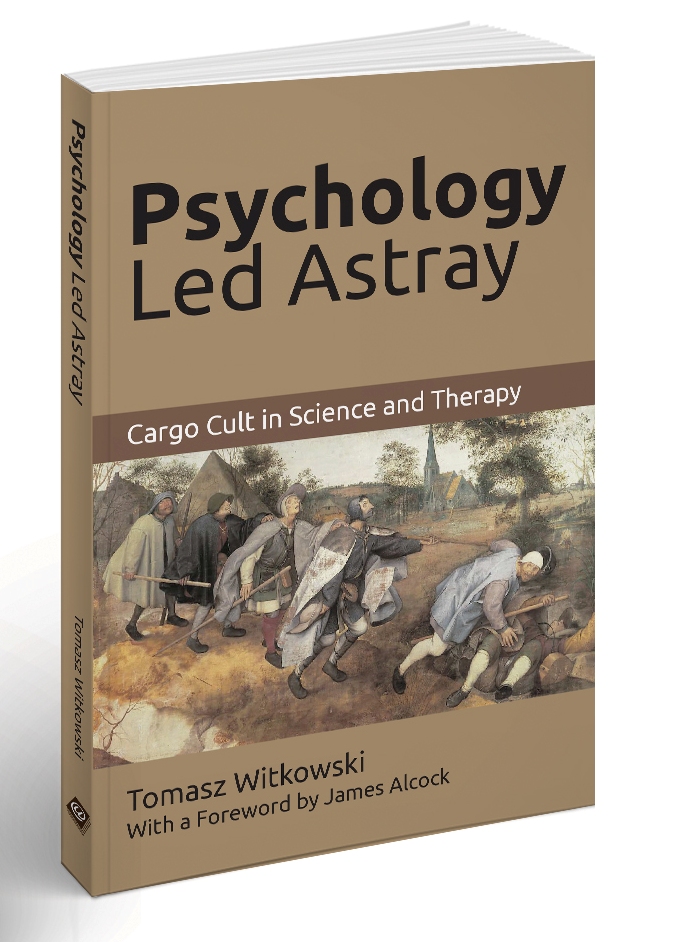
Psychologist Witkowski follows up his 2015 book Psychology Gone Wrong (with M. Zatonski) with this second part of what he says will be a trilogy devoted to the dark side of psychology. It examines the many problems that plague modern psychological research and psychotherapeutic practice. He critiques problems in statistical significance, over-generalization of findings from neuroscience, and uncontrolled experiments on humans, and he picks apart a number of questionable practices in the treatment of children, including the pseudoscience of educational kinesiology, attachment therapy, trauma debriefing, Facilitated Communication, Dolphin Therapy, and so on. In his Foreword Alcock calls this “a very important and valuable book” and praises the author for not just his critical examinations of shortcomings in psychology but for his support of the value of evidence-based psychology.
BrownWalker Press, 2016, 276 pp., $29.95.
KUP TERAZ! 3  
Zakazana psychologia, t. II – okładka

O tym, jak psychologia upodabnia się do nauki kultu cargo, piszę w drugim tomie „Zakazanej psychologii. Nauka kultu cargo i jej owoce”. Książka w księgarni Bonito »

Chcesz dostawać moje nowe teksty e-mailem? Zapisz się poniżej.

„Psychology Led Astray” już w sprzedaży!

Z radością informuję, że moja nowa książka trafiła niedawno do księgarń. Jest dostępna na stronach wydawcy: jako wersja paperback i pdf eBook oraz w Amazonie: Książka otrzymała już wiele pozytywnych opinii, m.in. od prof. Elisabeth Loftus, prof.

Z radością informuję, że moja nowa książka trafiła niedawno do księgarń. Jest dostępna na stronach wydawcy: http://www.brownwalker.com/book/1627346090 jako wersja paperback i pdf eBook oraz w Amazonie: https://www.amazon.com/Psychology-Led-Astray-Science-Therapy/dp/1627346090 Książka otrzymała już wiele pozytywnych opinii, m.in. od prof. Elisabeth Loftus, prof. Jamesa Alcocka a obszerna recenzja autorstwa dr Harriet Hall ukazała się na opiniotwórczym portalu Science Based Medicine. Dostrzegli ją również redaktorzy „Observera” i umieścili na październikowej liście Books to Check Out.  Będę niezmiernie wdzięczny, jeśli Wy Drodzy Czytelnicy tego bloga, wesprzecie moje działania kupując tę książkę. Prawdziwym zaszczytem będzie dla mnie, jeśli zechcecie napisać recenzję. Każda choćby jednozdaniowa recenzja czytelnicza umieszczona w Amazonie lub innej księgarni internetowej jest dla mnie bardzo cenna. Tym, którzy podejmą wysiłek przeczytania tej książki nie życzę przyjemnej lektury, bo pewnie nie jest przyjemnością zaglądanie do puszki pandory. Mam jednak nadzieję, że zasmakujecie w intelektualnej podróży, której celem było odkrycie tego, co przybiera formy kultu cargo w psychologii, a co przesłania prawdziwe jej oblicze. 3


Zakazana psychologia, t. II – okładka

O tym, jak psychologia upodabnia się do nauki kultu cargo, piszę w drugim tomie „Zakazanej psychologii. Nauka kultu cargo i jej owoce”. Książka w księgarni Bonito »

Chcesz dostawać moje nowe teksty e-mailem? Zapisz się poniżej.

Kiedy pomoc psychologa może zaszkodzić?

W cyklu Człowiek 2.0 emitowanym przez radio TOK FM audycja prowadzona przez redaktora naukowego FOCUS – Jana Stradowskiego. Oto jak pisze o audycji:

  Kiedy pomoc psychologa może zaszkodzić? [BLOG]W cyklu Człowiek 2.0 emitowanym przez radio TOK FM audycja prowadzona przez redaktora naukowego FOCUS – Jana Stradowskiego. Oto jak pisze o audycji:  
Wypadek samochodowy, trzęsienie ziemi, atak terrorystyczny – takie zdarzenia mogą zostawić trwałe ślady w psychice. Jednak badania pokazują, że większość z nas dobrze sobie radzi z traumą. Odpowiada za to zjawisko tzw. rezyliencji. Już w latach 40. XX wieku amerykańscy lekarze zaobserwowali, że część osób chorych psychicznie całkiem nieźle radzi sobie w życiu. Zakładali rodziny, podejmowali pracę i mieli wysoki poziom poczucia osobistego szczęścia. Okazało się, że odporność psychiczna człowieka jest całkiem spora. „Nie chodzi o to, żeby nigdy nie upaść, tylko by szybko i w miarę skutecznie się podnosić. Nie być ołowianym żołnierzykiem, lecz wańką-wstańką” – mówi doc. Tomasz Ochinowski z Katedry Psychologii i Socjologii Zarządzania na Uniwersytecie Warszawskim w artykule „Jak się nie dać przeciwnościom losu“. Jednak część osób, które przeżyły traumę cierpi potem na zaburzenia takie jak zespół stresu pourazowego (PTSD). Jak i kiedy pomagać takim ludziom? Okazuje się, że nie należy tego robić bardzo szybko. Pomoc psychologiczna w formie terapii takiej jak np. debriefing, udzielona tuż po traumatycznym wydarzeniu może nie tylko nie pomóc, ale wręcz zaszkodzić pacjentom. Tak było m.in. w przypadku osób, które przeżyły atak na World Trade Center 11 września 2001 r. Kiedy więc nieść pomoc ofiarom traumy i jak powinna ona wyglądać? O to zapytam moich gości w studiu TOK FM: dr Agnieszkę Popiel, psychiatrę i psychoterapeutkę z Uniwersytetu SWPS i programu TRAKT Uniwersytetu Warszawskiego oraz dr. Tomasza Witkowskiego, psychologa, pisarza, autora książek z serii „Zakazana psychologia” („Psychology Gone Wrong”), przedstawicielaKlubu Sceptyków Polskich. Uwaga – ważna wiadomość. Program TRAKT jest otwarty dla osób, które mają problemy psychologiczne po wypadku drogowym. W jego ramach można bezpłatnie otrzymać diagnozę i fachową terapię w wielu miastach w Polsce. Szczegóły – na stroniewww.wypadki-drogowe.pl Przy okazji polecam archiwalne audycje o stresie, terapii depresji przez internet, racjonalnym myśleniu i korzyściach z porażek. Nowego odcinka „Człowieka 2.0” możecie posłuchać 230 kwietnia po godz. 20 na antenie Radia TOK FM. Później będzie dostępny jako podcast na stronie archiwum audycji oraz w aplikacji mobilnej TOK FM. Kompletny spis odcinków znajdziecie na stronie WikiRadia. Zapraszam!
 
Psychoterapia bez makijażu – okładka

Historie pacjentów skrzywdzonych w terapii i rozmowy z terapeutami zebrałem w książce „Psychoterapia bez makijażu. Rozmowy o terapeutycznych niepowodzeniach”. Książka w księgarni Bonito »

Defekt – okładka

O tym, co terapia potrafi zrobić z człowiekiem, opowiadam nie tylko jako psycholog. W powieści „Defekt” śledzę zdolnego młodego człowieka przez jego związki i kolejne terapie i pytam, co się dzieje, gdy za wszelką cenę próbujemy dopasować się do normy.

Przeczytaj fragment (EPUB)  ·  Przeczytaj rozmowę o powieści

Chcesz dostawać moje nowe teksty e-mailem? Zapisz się poniżej.

Recenzja „Psychology Led Astray” w Science-Based Medicine

15 Marca, 2016 roku recenzja mojej nowej, jeszcze nieopublikowanej książki „Psychology Led Astray: Cargo Cult in Science and Therapy” ukazała się w prestiżowym: Autorką recenzji jest dr Harriet Hall. Cargo Cult Psychology.

15 Marca, 2016 roku recenzja mojej nowej, jeszcze nieopublikowanej książki  „Psychology Led Astray: Cargo Cult in Science and Therapy” ukazała się w prestiżowym: Science-Based Medicine Autorką recenzji jest dr Harriet Hall.

Cargo Cult Psychology

Last year I reviewed Tomasz Witkowski and Maciej Zatonski’s book Psychology Gone Wrong where they pointed out that many of psychology’s accepted beliefs and therapies were not based on good evidence. Now Witkowski has written a new book, to be published later this year, Psychology Led Astray: Cargo Cult in Science and Therapy, that is certain to ruffle a lot of feathers. He compares psychology to cargo cults. He says, “the cargo cult phenomenon is virtually absent in physics, chemistry, and mathematics, yet it runs rampant in both psychology and sociology.” He uncovers cargo cult practices in psychology, unmasking therapies that are devoid of science, dangerous, and even cruel, especially those directed at children. Read more…    
Zakazana psychologia, t. II – okładka

O tym, jak psychologia upodabnia się do nauki kultu cargo, piszę w drugim tomie „Zakazanej psychologii. Nauka kultu cargo i jej owoce”. Książka w księgarni Bonito »

Chcesz dostawać moje nowe teksty e-mailem? Zapisz się poniżej.

Prof. James Alcock o „Psychology Led Astray”

Kolejna pozytywna recenzja mojej książki, tym razem pióra wybitnego kanadyjskiego psychologa i sceptyka – prof. Jamesa E. Alcocka, który jest znanym krytykiem parapsychologii i członkiem członkiem Rady Naukowej The Skeptical Inquirer.

James_AlcockKolejna pozytywna recenzja mojej książki, tym razem pióra wybitnego kanadyjskiego psychologa i sceptyka – prof. Jamesa E. Alcocka, który jest znanym krytykiem parapsychologii i członkiem członkiem Rady Naukowej The Skeptical Inquirer. W 1999, został zaliczony do grona najbardziej znaczących sceptyków XX wieku. W maju 2004 r. CSICOP uhonorował go najwyższym zaszczytem – In Praise of Reason Award. Więcej… O książce napisał m. in.
This is a well-written book, and the extensive documentation that is provided makes it an excellent source of reference material as well. Every psychologist, every psychology student, and every layperson with an interest in psychology or with need for its services will benefit immensely from reading it. And although it is largely devoted to decrying the egregious departures from scientific rigour that afflict much of our discipline and to skewering the many false and exploitative therapies and techniques that are huckstered to a hungry public, it is ultimately a book that honours and defends science-based psychology. I highly recommend it.

Dla zainteresowanych zamieszczam poniżej pełen tekst recenzji.

Psychology Led Astray: Cargo Cult in Science and Therapy

by Tomasz Witkowski

Reviewed by James Alcock

This is a very important and valuable book, both for the social scientist who values rigourous scientific inquiry and for the layperson interested in the state of modern psychology. Its value lies in part because Tomasz Witkowski has summarized so succinctly and so powerfully the many problems that plague modern psychological research and its application, and in part because he has done so in such an engaging manner. Although dealing with material that could by its nature constitute a dry and boring read, he has enlivened his critical commentary by weaving through it entertaining and informative strands of storytelling, both literary and historical. But this is also likely to be a disturbing book for that same social scientist who values rigourous scientific inquiry, as well as for the layperson who may at some point seek psychological assistance. It is disturbing because it holds a mirror up to psychological research and practice, and much of what is reflected is not very pretty. Witkowski begins with reference to physicist Richard Feynman’s characterization of social science as a cargo cult, and he makes a compelling case that is there is much about modern psychology that fits with that pejorative analogy: He points to the persistence of inappropriate and misleading statistical practices that underlie much of psychological research, practices that have endured despite decades of criticism and condemnation. He addresses the essentially parochial nature of much of psychological research that, for the most part, has been conducted with participants who are representative of only a small segment of the populations of a few nations that in turn represent only a small segment of the world at large. He skewers the many fads and crazes that seem to sweep regularly through applied psychology (and in some cases, that stop sweeping and become firmly entrenched). He targets the proliferation of untested varieties of psychotherapy; the overgeneralization and exaggeration of findings from neuroscience; the creation from whole cloth of “disorders” such as the Adult Children of Alcoholics syndrome in the absence of any appropriate evidence; the continuing use of discredited treatment approaches such as Trauma Debriefing, Attachment/holding therapy, Facilitated Communication, and Dolphin Therapy. And for the layperson, he augments his critical examination of psychological therapies with guidance for anyone seeking psychotherapy. However, Witkowski does not throw out the baby with the bathwater; he concludes his penetrating criticism by challenging Feynman’s “cargo cult” appraisal and pointing out that evidence-based psychology has made very  significant contributions to both understanding and improving the human condition. This is a well-written book, and the extensive documentation that is provided makes it an excellent source of reference material as well. Every psychologist, every psychology student, and every layperson with an interest in psychology or with need for its services will benefit immensely from reading it. And although it is largely devoted to decrying the egregious departures from scientific rigour that afflict much of our discipline and to skewering the many false and exploitative therapies and techniques that are huckstered to a hungry public, it is ultimately a book that honours and defends science-based psychology. I highly recommend it. Blind
Zakazana psychologia, t. II – okładka

O tym, jak psychologia upodabnia się do nauki kultu cargo, piszę w drugim tomie „Zakazanej psychologii. Nauka kultu cargo i jej owoce”. Książka w księgarni Bonito »

Chcesz dostawać moje nowe teksty e-mailem? Zapisz się poniżej.

„Psychology Led Astray” – pierwsza recenzja

Nieznany jest jeszcze termin wydania mojej nowej książki, ale już otrzymałem pierwszą pozytywną recenzję. Prof. Elisabeth F. Loftus, jedna z 30 najbardziej wpływowych psychologów na świecie, zasłużona w walce z pseudonauką tak o niej napisała: Sadly, too much popularizing about psychology is filled with misrepresentations and myths. Not willing to sit silently and allow this to happen, Tomasz Witkowski, in this fine book, „Psychology Led Astray: Cargo Cult in Science and Practice” courageously confronts the problem head on. Scientists, mental health professionals, students, and laypeople who care about separating the pseudoscience from the science need to read this book.
Zakazana psychologia, t. II – okładka

O tym, jak psychologia upodabnia się do nauki kultu cargo, piszę w drugim tomie „Zakazanej psychologii. Nauka kultu cargo i jej owoce”. Książka w księgarni Bonito »

Chcesz dostawać moje nowe teksty e-mailem? Zapisz się poniżej.

„Psychology Gone Wrong” w „The Skeptical Intelligencer”

Prof. Michael Heap, redaktor naczelny kwartalnika The Skeptical Intelligencer publikowanego przez Association for Skeptical Inquiry w nr 3 z 2015 roku (Vol 18, 2015, Number 3, Autumn) zamieścił recenzję naszej książki. Oto jej pełen tekst:

Prof. Michael Heap, redaktor naczelny kwartalnika The Skeptical Intelligencer publikowanego przez Association for Skeptical Inquiry  w nr 3 z 2015 roku (Vol 18, 2015, Number 3, Autumn) zamieścił recenzję naszej książki. Oto jej pełen tekst:
The failings of modern psychology are the subject of a recent book by Tomasz Witkowski and Maciej Zatonoski entitledPsychology Gone Wrong: The Dark Sides of Science and Therapy (Boca Raton FL: BrownWalker Press, 2015). The authors are founding members of the Polish Skeptics Club. Dr Witkowski is a psychologist and Dr Zatonski is a surgeon working in the UK. In their book they review the history of fraudulent research and questionable research practices; the willingness of many psychologists to embrace pseudoscientific ideas and practices (psychoanalysis, recovered memory therapy, projective testing, NLP, etc.); exaggerated claims for the efficacy of psychological interventions; and so on.  In each case the authors support their thesis with abundant references. Some readers may find the authors’ style rather uncompromising and without balance (e.g. in their account of ‘the Burt affair’ which was discussed in the Skeptical Adversaria, 2012 (2); Burt does have his defenders). Also, quite a number of the frauds that the authors describe are from disciplines other than psychology and it may be argued that the authors’ complaints are characteristic of science generally (though I think there is a strong case for looking at psychology for particularly instructive examples of ‘science gone wrong’). Readers will wish that the authors included an index and I would advise that when the second edition is in preparation, a good proof reader is employed (the authors should be congratulated on producing an easy-to-read book but even the most forgiving of readers will not excuse the number of errors in the text). For professional psychologists, students and anyone who needs a working knowledge of academic and applied psychology (which includes all skeptics) this is an important book and I thoroughly recommend it.

Zakazana psychologia, t. I – okładka

O psychoanalizie, pseudoterapiach i szarlatanerii w psychologii piszę w pierwszym tomie „Zakazanej psychologii. Pomiędzy nauką a szarlatanerią”. Książka w księgarni Bonito »

Chcesz dostawać moje nowe teksty e-mailem? Zapisz się poniżej.
„Psychology Gone Wrong” w „Skeptical Inquirer”

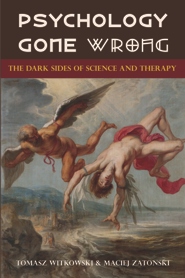
1627345280a Mam zaszczyt poinformować, że recenzja naszej książki Psychology Gone Wrong. The Dark Sides of Science and Therapy ukazała się w bieżącym numerze (39.4, July/August 2015) Skeptical Inquirer – flagowym czasopiśmie The Commitee for Skeptical Inquiry. Zapraszamy do lektury!   SI
Zakazana psychologia, t. I – okładka

O psychoanalizie, pseudoterapiach i szarlatanerii w psychologii piszę w pierwszym tomie „Zakazanej psychologii. Pomiędzy nauką a szarlatanerią”. Książka w księgarni Bonito »

Chcesz dostawać moje nowe teksty e-mailem? Zapisz się poniżej.